
Newsroom
Gloria Steinem and the Roots of Hope
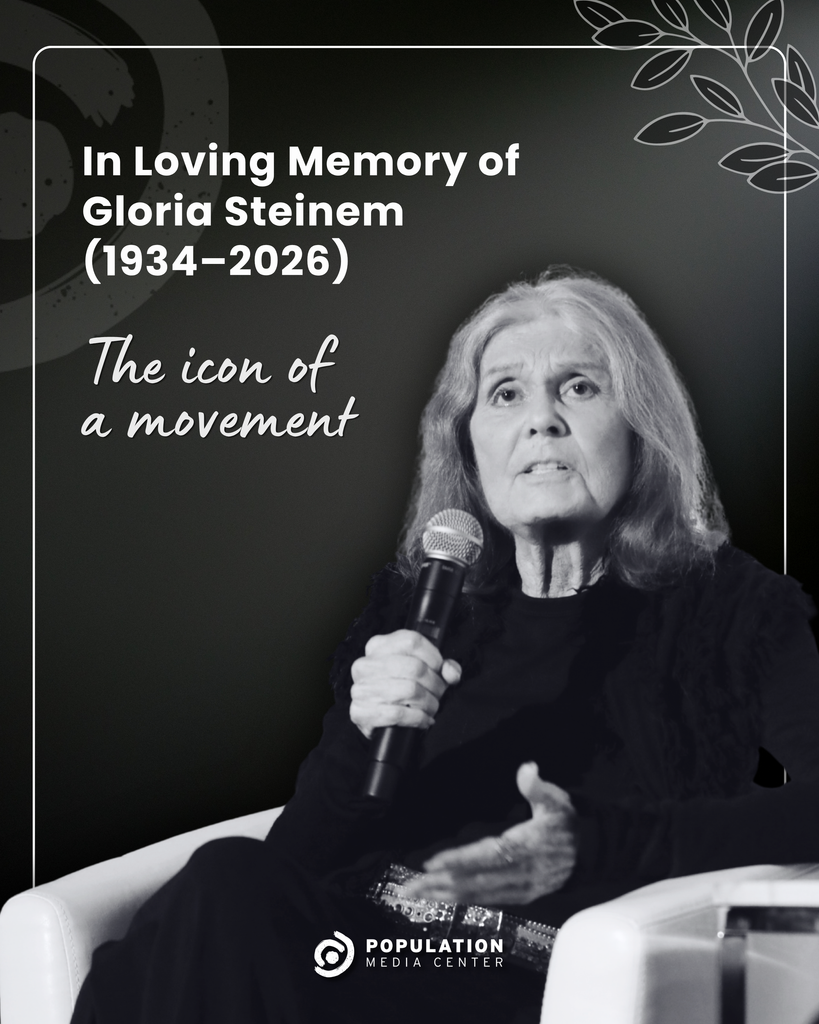
The world lost Gloria Steinem on September 2. She was 92, and she had spent nearly a century insisting the world could be more equitable. In the days since, it feels like she has been remembered from every possible angle: the journalist, the organizer, the icon of a movement. There was even a fabulous piece reflecting on her fashion. And, one of my personal favorites, a reel of her with Kermit and Miss Piggy (salty language included).
I was fortunate enough to meet Gloria in person and so many of the attributes people are celebrating were in high relief: her humility and humor, her kindness, and how much time she spent listening. As I reflect on her legacy, I realize that she innately recognized what I’m going to call the roots of hope.
I met Gloria at PMC’s 25th anniversary celebration in New York in September 2023. She was a member of our Program Advisory Board, and she was with us for a simple, uncompromising reason: she believed in sexual and reproductive health and rights for every woman, everywhere in the world. At 89-years-young, she was willing to be a featured speaker and was interviewed by our Founder, Bill Ryerson.
What I remember most was Gloria’s ability to listen. She made you feel like the most important person as you spoke. She was funny. And she was warm, but with clear boundaries: she wanted very few photos! The photo-resistance was the only sign of being burdened with being an icon. She seemed to be almost constantly smiling even while she saw exactly what we’re up against: the patriarchy, the backlash, the machinery that keeps power where it is.
I’ve thought about her outlook a lot since her passing because the truth is this work is hard. I am so grateful for the work I do, but the gratitude and the difficulty sit right next to each other. At PMC, we advance rights, and to do that well, we have to look clearly at what stands in the way. PMC’s research at the outset of every program surfaces hard facts and, harder still, the personal stories beneath facts: girls subjected to genital mutilation; the nearly one in three women worldwide who experience physical or sexual violence in their lifetime; the countless realities, from immense to mundane, meant to make women and girls small. These are the conditions that keep people from ever becoming their fullest selves, from unleashing all their brilliance into the world.
For me, my peace and my insight about Gloria’s passing came as I read about her apartment in New York City. The Manhattan brownstone in which she’d lived since 1967 is being kept, through her foundation, as a gathering place. It will continue to be a home for meetings, conversation, listening circles, planning, and a catalyst for new ideas and new partnerships. This is not the legacy of someone who thought change came from any single person. This is the legacy of someone who knew that everything depends on what people can build together.
Gloria held an unshakeable belief that ordinary people could band together and overcome incredible obstacles. She trusted people more than she feared the systems arrayed against them. She used to say that real change grows like a tree — not from the top, but from the bottom, from everyday people and their communities.
And that’s the throughline we should come back to.
Gloria used a beautiful metaphor of change as growing from the bottom up like a tree: it’s the relationships that create a web of roots that sustain the tree of change. And as the roots spread and grow, so does hope about the size and scope of the tree of change. If our relationships are nourished, then the roots of hope are nourished and then we have the conditions for action and real change.
Gloria found her hope in the people around her, and she instilled it in the people around her.
These roots matter – maybe now more than ever. In an era of rapid disinformation and urgent, coordinated attacks on so many human rights, the temptation is to feel isolated and outmatched. Our phones and our computers are tools of this work but they are also sources of sorrow and isolation. The antidote is relationships – real relationships. Being in the room with each other. Trusting and valuing the relationships we have, and staying open to the ones still to come as we build community and movement and keep moving forward.
That’s the work Gloria believed in, and it’s the work we can continue.
Thank you, Gloria. For the listening, for the laughter, and for reminding us that hope was never a solo act. We need a beautiful, tangled web of relationships, creating roots of hope that nourish and grow our tree of change.