

Newsroom
International Day of Zero Tolerance for Female Genital Mutilation
On the International Day of Zero Tolerance for Female Genital Mutilation, PMC stands with the global community working to end FGM by 2030.
Today, more than 12,000 girls are at risk of undergoing FGM. That is 4.4 million girls this year facing a violation of their basic human rights — violence that will stay with them for the rest of their lives.
Laws alone cannot stop FGM. To end it, we must change the social norms that sustain it. PMC has co-created more than 20 entertainment-education projects specifically designed to address FGM across Burkina Faso, Ethiopia, Kenya, Liberia, Mali, Senegal, Sierra Leone, and beyond. Our approach uses rigorously researched, compelling storytelling to engage whole communities — including men and boys — in reimagining what it means to value and protect girls.
Barnusietehdeh (“let’s do the right thing”) in liberia
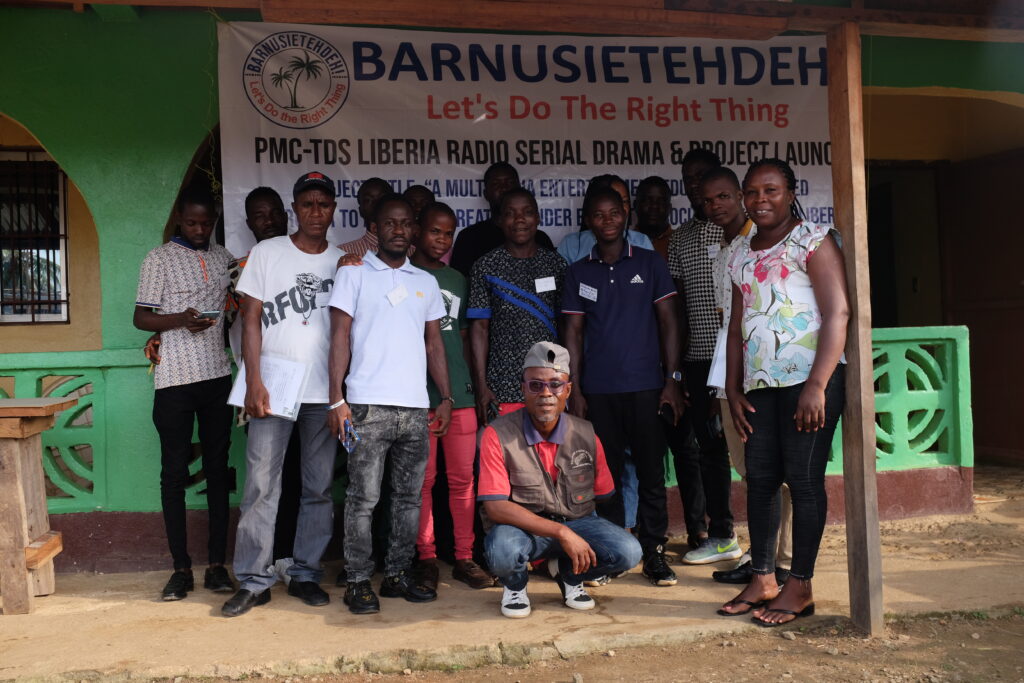
In partnership with Talking Drums Studio and with funding from the Swedish International Development Agency (SIDA), PMC launched Barnusietehdeh — a nationwide multimedia campaign in 2023–2024 combining a radio drama, call-in talk shows, and participatory theater across all 15 of Liberia’s counties.
The program addressed sexual and reproductive health and rights, gender equality, and social cohesion, including FGM. Liberia has taken significant legislative steps with the Domestic Violence Act and an FGM ban, but lasting change requires shifting the community norms that sustain harmful practices.
The impact data tells the story: among listeners, opposition to FGM rose from 17 percent at baseline to 64 percent at endline. That reversal in public sentiment highlights what radio can do when stories respect cultural heritage while challenging its most harmful elements.
Ethiopia: Over Two decades of impact addressing fgm
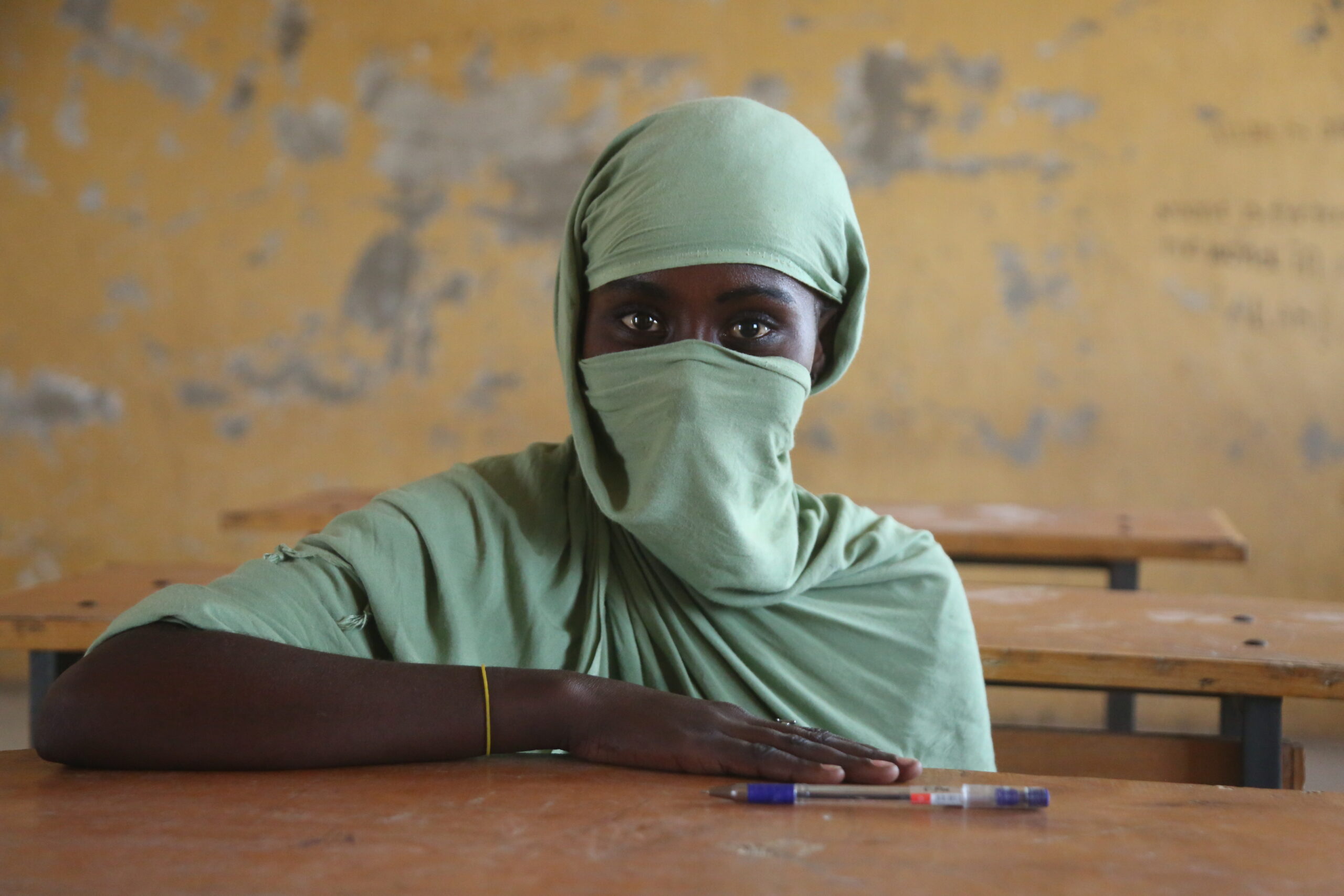
PMC has been working to end FGM in Ethiopia for more than 20 years through multiple radio dramas that have reached millions of listeners.
Nekakat (“Cracked”) was a 156-episode radio drama that aired across Amhara, Oromia, Tigray, SNNP, and Addis Ababa from late 2020 to mid-2022. The series addressed FGM, safety, and bodily autonomy, reaching over 820,000 individuals and engaging communities through listener groups and digital platforms.
Sibrat (“Trauma”) ran for 226 episodes on the National Services of Radio Ethiopia, confronting the physical and emotional consequences of FGM through the story of Abeba and other resilient characters. The drama’s popularity turned listeners into advocates, prompting community discussions that challenged the validity of FGM.
“Before listening to the drama we had only superficial knowledge about FGM. Compared to the knowledge we have now, what we knew is almost nothing,” said a male listener. “The drama enabled us to see and feel the sufferings of those who have undergone the cruel operation. As a result we are determined to fight against the practice.”
Life in the Balance: Rewriting Kenya’s Cultural Script
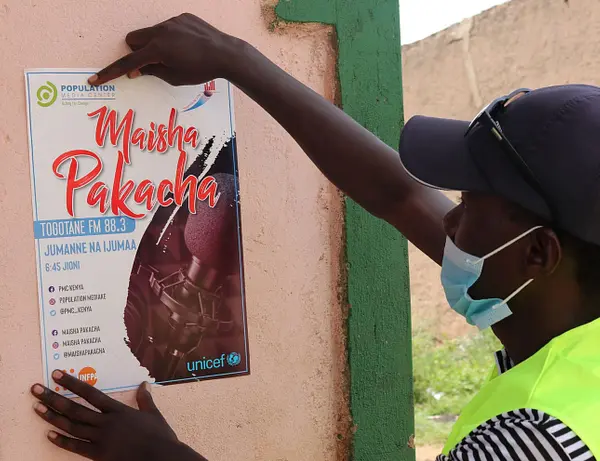
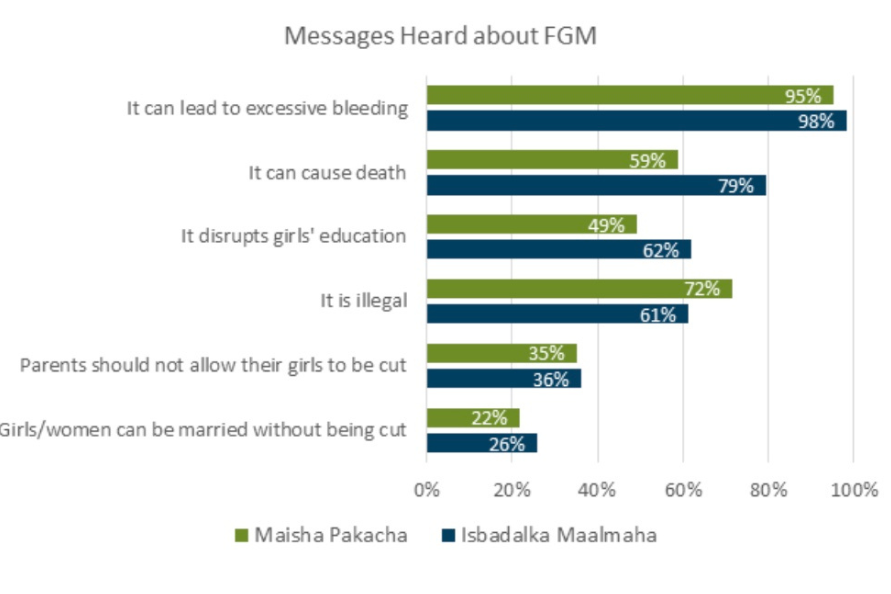
PMC expanded to Kenya in 2020 to support the UNFPA-UNICEF Joint Programme on the Elimination of FGM. PMC-Kenya launched two radio dramas — Maisha Pakacha (“Life is a Carrier Bag”) in Swahili and Isbadalka Maalmaha (“Changing Days”) in Somali — targeting critical FGM hotspots including the Somali Region and Nyanza Province.
Between January 2021 and January 2022, the dramas captured an average of 97.2 percent of the available audience and engaged over 1.7 million Kenyans weekly. Interactive engagement on WhatsApp, Facebook, Instagram, and Twitter extended the conversation beyond the broadcast.
Maisha Pakacha told stories that made the consequences of FGM visceral. In the fictional village of Girirriani, Mang’iti — pressured by the family matriarch — forces his 13-year-old daughter Robi to undergo FGM. Robi suffers severe complications and eventually develops an obstetric fistula during childbirth. She flees home to pursue education and autonomy. Witnessing his daughter’s suffering, Mang’iti transforms from perpetrator to protector — shielding his younger daughter by enrolling her in boarding school and joining the council of elders to advocate for ending the practice.
A key finding from the Kenya programs: Community Health Volunteers, already the community’s most trusted health sources, became organic promoters of the dramas without instruction from PMC. Because the shows were genuinely entertaining, healthcare workers began championing the messages during their daily rounds — bridging clinical knowledge and cultural transformation.
The Final Act: Rewriting the Future for Girls Everywhere
PMC’s approach involves deep collaboration with local creators and international partners to ensure our narratives are not only entertaining but also rooted in the specific social realities of each region. Through this model, we move beyond simply “telling” people to stop harmful practices; instead, we allow audiences to experience the emotional and physical journey of characters who choose a different path, making the abandonment of FGM a community-led aspiration rather than an outside mandate.
Ending FGM is a global imperative because it remains one of the most profound barriers to gender equality and human rights. It is not merely a traditional procedure but a practice that carries lifelong consequences ranging from chronic physical pain and birth complications to deep-seated psychological trauma. By eliminating FGM, we unlock the full potential of girls and women, allowing them to pursue education, lead healthy lives, and build the futures they want and deserve.

