

Newsroom
Stories as Resistance: PMC at Sundance 2026
Population Media Center arrived at the 2026 Sundance Film Festival in Park City, Utah with a clear conviction: stories are the most powerful and underused tool in the fight for human rights.
We are at a critical moment. The rights of women and girls are under coordinated threat. Studios and broadcasters are pulling back from reproductive health storylines. Misinformation and disinformation campaigns are reshaping what feels culturally acceptable — from false claims about birth control to pronatalist pressures around family size.
PMC has been building the connective tissue between researchers, creators, advocates, and producers for nearly three decades. After speaking on two panels, co-hosting an event dedicated to solidarity in narrative, and many inspiring conversations, we left Park City more committed than ever to using storytelling to shift what the world believes is possible.
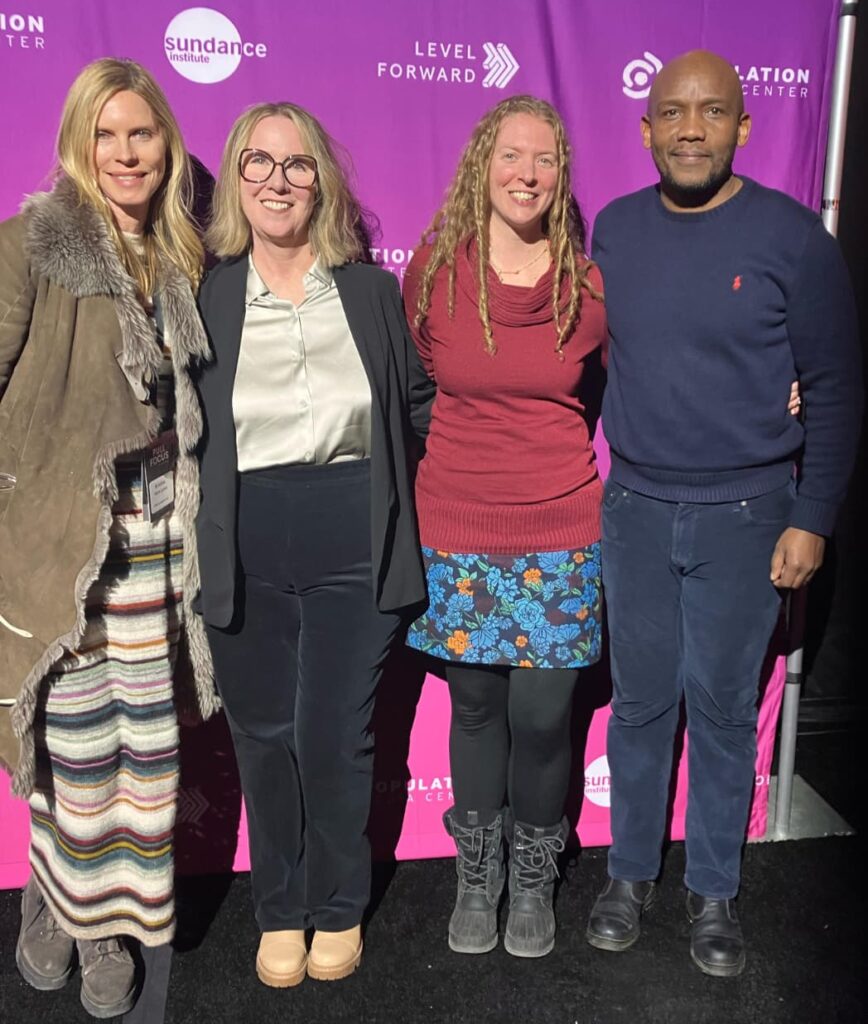
Knowledge Sharing & Partnerships
The narrative ecosystem is in a profound state of flux — shaped by mergers, strikes, changing technology, political realities, and shifting audience trends. That makes connections to share visions, experience, and possibility all the more important.
PMC President and CEO Margot Fahnestock participated in two forward-looking discussions. On January 22, she joined “Not Waiting: Creating Ecosystems” at The Impact Lounge alongside Victor Hugo Orozco Olvera of the World Bank, Kamala Avila-Salmon of Kas Kas Productions, and moderator Alison Brower of The Ankler. The conversation explored how to use the full production and dissemination journey to build impact storytelling that challenges the false binary between stories that matter and stories that succeed commercially.
Two days later, Margot joined “From Plan A, B, to C: New Stories Around Reproductive Health” with Regina Davis Moss of In Our Own Voice, Jess Jacobs of the Plan C documentary, Caren Spruch of Planned Parenthood, and Humza Syed of Level Forward, moderated by Vicki Shabo of New America. The panel explored how storytelling can advance reproductive justice at a moment when the stakes have never been higher.
Both conversations kept returning to the same truth — one that Kelly Baden of the Guttmacher Institute put plainly: “Data and evidence are necessary but not sufficient to change the world.” Narrative is the missing link.
Bans Off Our Stories
Saturday night, January 24th, PMC and Level Forward co-hosted “Bans Off Our Stories: The Solidarity in Narrative” at The Park — an event featuring storytellers, activists, producers, performers, and more – turning conversation, stories, and music into something that felt less like an event and more like a movement gathering strength. The venue was filled with the kind of energy that only happens when people who care deeply about the same things find each other in the same room.
The evening included Olive Nwosu, director of LADY, the Nigerian feature film that debuted at Sundance and earned a Special Jury Award for Best Ensemble; LaTosha Brown, award-winning cultural organizer, co-founder of Black Voters Matter and Southern Black Girls & Women’s Consortium; Dr. Kimberlé Crenshaw, founder and executive director of African American Policy Forum; V (formerly Eve Ensler), award-winning artist and activist, creator of The Vagina Monologues; Vicki Shabo, senior fellow for gender equity and founder and director of the Entertainment Initiative Better Life Lab at New America; and dancers from the Ngoma y’Africa Cultural Center, in partnership with WOFA Performing Arts and AFROFLEXARS.
The night was a reminder that community is not a side effect of this work. It is the infrastructure.
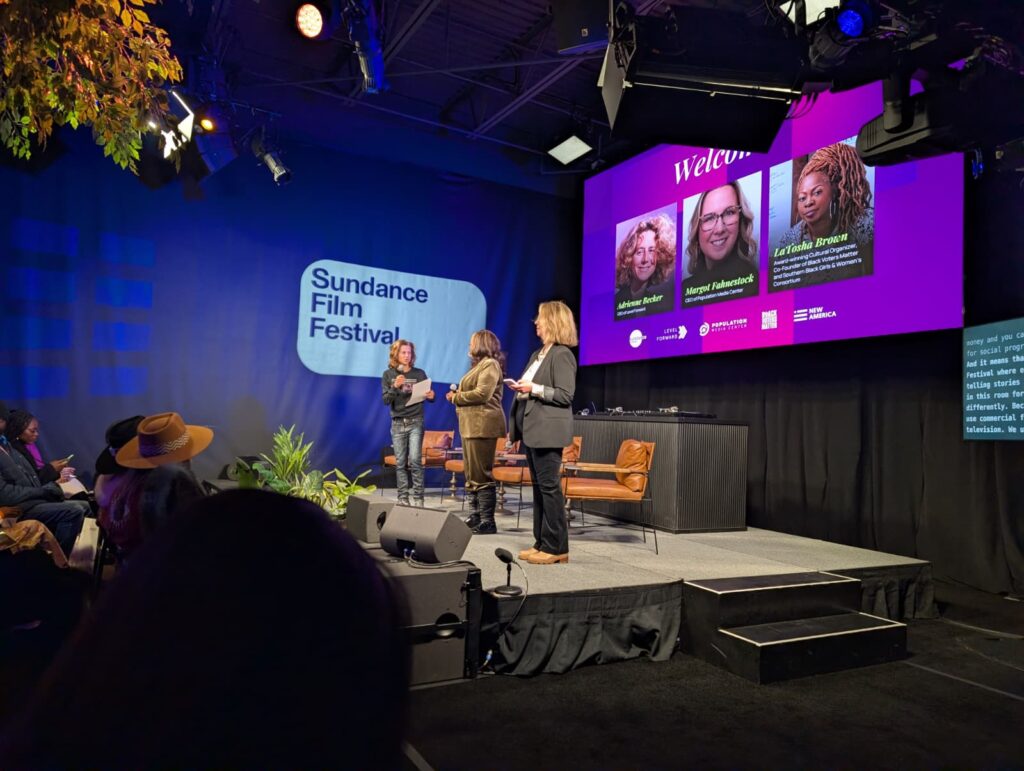
The Moment to Introduce Mother Justice
The evening carried a major announcement. PMC’s Margot Fahnestock announced Mother Justice, a new series of fictional short films produced by Level Forward in partnership with PMC. The films will contribute to ongoing movements addressing the present-day reality in which Black women face more than three times the mortality rate of their white counterparts in the U.S., centering community-driven solutions and strategies that result in different outcomes and grounding audiences in stories of care, joy, resilience, and hope.
Executive producer LaTosha Brown led a session grounding the films and the incredible community around these stories. PMC’s Missie Thurston shared how the films are rooted in PMC’s signature community research and theory, using examples of positive deviance to create change. The films currently greenlit for the Mother Justice film series demonstrate a dedication to lived experience and community solutions, impact evaluation, top-tier production, and diverse community partners.
WHAT WE LEARNED
Sundance 2026 made several things clear. The narrative ecosystem is in a profound state of flux — and that flux is an opening, not just a threat. The false binary that pits impactful storytelling against commercial success continues to crumble.
Concepts like leveraging fandom and “worldbuilding” should be viewed as key points of strength for both impact and commercial success — building rich, expansive story universes that invite audiences to inhabit new values over time. And whether the conversation turned to Hollywood, reproductive health, or global media ecosystems, one throughline kept emerging: the extraordinary creative energy and global importance of storytelling cannot be denied when looking at cultural narratives and narrative change.
PMC left still believing the stories we tell now determine what rights will survive – grateful for more insights, more partners, and more ways to move this critical work forward.


