
2025 Annual Report

A letter from our president
It was the beginning of February 2025. The ground beneath our field had already shifted and seismic changes would continue.

I had just become President and CEO of PMC and I don’t need to remind anyone that 2025 was the year USAID was dismantled — the year international development, philanthropy, and the entertainment industry all dealt with upheaval at once. Funding vanished. Misinformation gained ground. Hard-won progress on sexual and reproductive health and rights looked fragile.
Here is what my first year taught me: when the systems around us falter, stories endure.
While institutions were being torn down our work kept meeting people where they are. In Nepal, the rebroadcast of Mai Sari Sunakhari (“Orchid Like Me”) sparked listening clubs, shadow plays, and a clay art initiative that let audiences physically shape the change they felt. In Mexico and the United States, Papás Por Conveniencia (“Family of Convenience”) reached millions — proof that entertainment can top the charts and open honest conversations about health at the same time. In Liberia, Barnusietehdeh! (“Let’s Do the Right Thing”) research results came in showing what entertainment can do.
This is why PMC exists. For nearly three decades, we have used the power of entertainment to shift norms and protect rights at scale — rooted in local talent, driven by evidence, resilient by design. The landscape will keep changing. Our resolve will not.
Thank you for writing this story with us.

Zambia: Real Results From Overflowing Classrooms
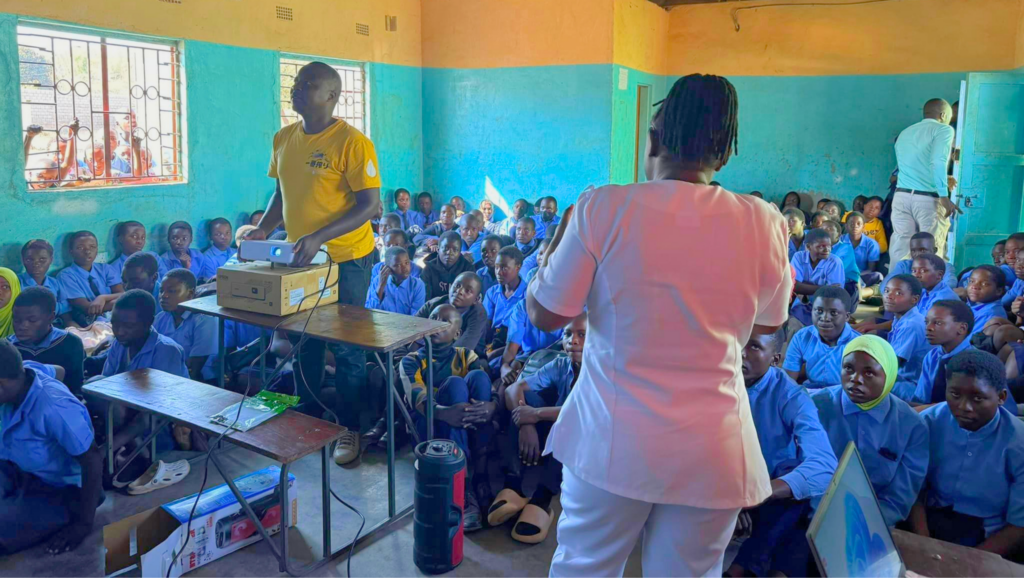
There wasn’t an empty seat in the room, so students crowded the windows just to catch a glimpse. On the wall, a comic book came to life: its panels projected large, its story told aloud by a local celebrity the community knew and loved. In Zambia’s Eastern Province, where nearly 40% of girls face teenage pregnancy, this PMC story did something powerful: it got young people talking openly about their health, their choices, and their futures. Students’ awareness of where to find care climbed 22 percentage points. See how PMC-Zambia turned bold ideas into real results.
Mexico: A Telenovela with a Purpose

Six million viewers tuned in each night in Mexico City alone — drawn by the drama, the romance, the familiar faces from telenovelas they’d loved as kids. But Papás Por Conveniencia (“Conveniently a Family”) was doing more than entertaining. One of Mexico’s most-watched shows, airing five nights a week in prime time, the show wove urgent real-life issues into its storylines: adolescent pregnancy, gender-based violence, reproductive health. In a country where more than 11% of girls aged 15 to 19 have been pregnant and over 70% have faced some form of violence, viewers didn’t just see a good story — they saw their own lives reflected, and a different path forward. Among teenage girls who watched, the intention to use a condom climbed from 57.9% to 79.5%.
Nepal: Molded by Stories
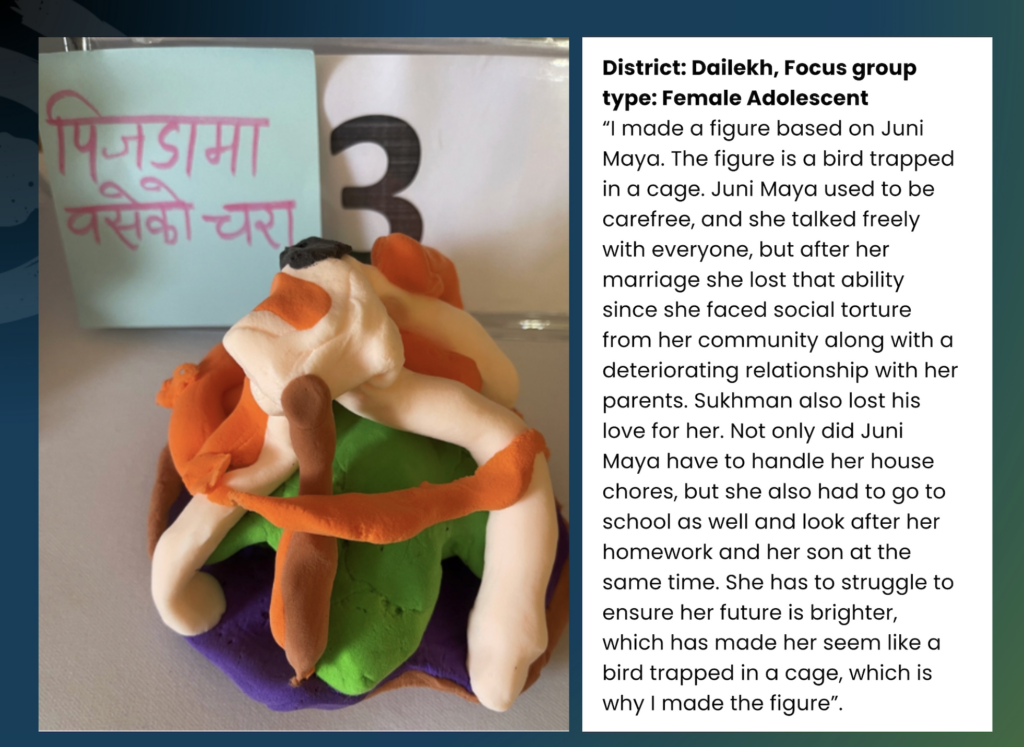
In Nepal’s Far West and Karnali provinces, stories that traveled by radio are taking on a new form — molded by hand, in clay. PMC’s popular Mai Sari Sunakhari (“Orchid Like Me”) radio drama was rebroadcast to the delight of longtime fans. Its characters and the questions they raised about child marriage, girls’ education, and women’s health then resurfaced in the palms of the people who listened. Community members molded figures to reflect on what the show meant to them. The clay became two things at once: a way to measure how deeply the stories took root and a fresh spark for the conversations that change minds. PMC’s stories don’t end when the broadcast does — that’s when they truly take shape.
Niger: Empowering Families, Inspiring Futures

In Niger, three out of four girls are married before their 18th birthday, and more than 2.6 million children never see the inside of a classroom. Then families started tuning in. Over 72 episodes, Dandalin Iyali (“Family Forum”) brought these truths into homes and courtyards across the country, told in the Hausa language, wrapped in the traditions and daily rhythms of Nigerien life. Broadcast on 70 community radio stations and carried further by listening clubs and online campaigns reaching hundreds of thousands, the drama did what statistics alone cannot: it changed minds. By the end, more than half of listeners had taken concrete action to keep their children in school.
Liberia: A Catalyst for Change
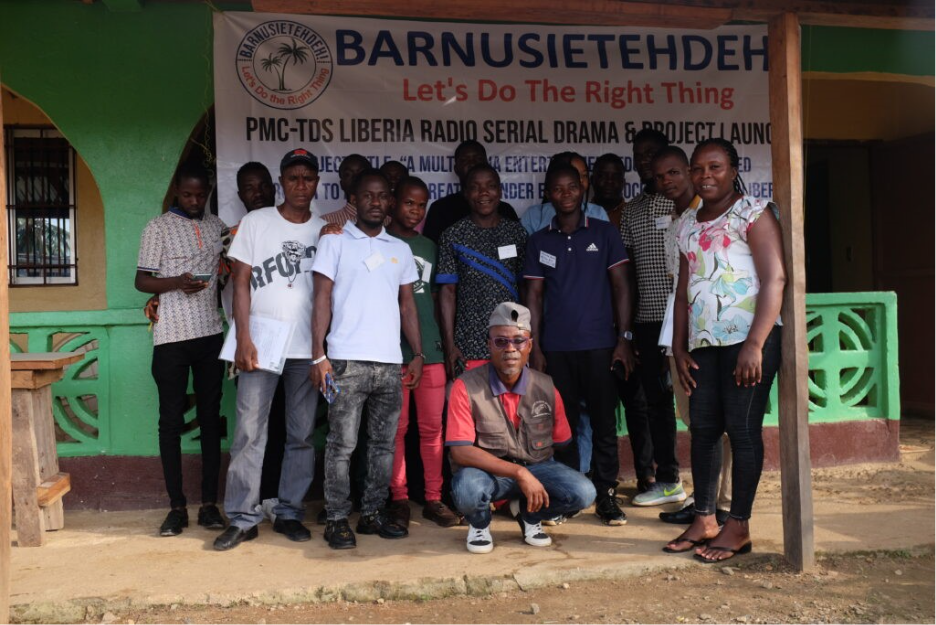
Liberia has always been a nation of storytellers, knowing how to entertain, connect, and carry a community’s wisdom from one generation to the next. So when Population Media Center set out to tackle some of the country’s hardest challenges, gender-based violence, reproductive health, and female genital mutilation, we began where Liberians always have: with story. Working alongside local partners and with support from the Swedish International Development Agency (SIDA), PMC brought Barnusietehdeh! (“Let’s Do the Right Thing”) to life. Across Liberia, the airwaves filled with characters who sounded familiar, faced challenges that hit close to home, and made choices that mirrored real life, catalyzing new conversations. By the project’s end, the share of listeners who strongly agreed that people have the right to make their own reproductive health choices had grown from 38% to 53%.
From Scripts to Social Change at the International Conference on Family Planning


In November, Population Media Center took the stage at the International Conference on Family Planning (ICFP 2025) in Bogotá, joining thousands of researchers, practitioners, and advocates advancing sexual and reproductive health and rights around the world. With PMC’s programming focused on family planning, reproductive health, and gender equity, the conference was a chance to do what PMC does best: share hard evidence, present new endline results, and turn proven stories into partnerships. From panels to hallway conversations, PMC brought the case for storytelling as social change to one of the field’s biggest global stages for sexual and reproductive health.
PMC President & CEO Published in Ms. Magazine

When it comes to birth control, misinformation is winning the algorithm. On TikTok and across social media, sensational and misleading claims about contraception rack up billions of views, while accurate guidance from health professionals struggles to break through. This has real consequences for young people’s health. In an op-ed for Ms. Magazine, PMC President & CEO Margot Fahnestock argues that fact-checking alone won’t fix this: young people respond to characters and stories, not corrections. So what if the same short-form video that spreads doubt could instead carry accurate, engaging storylines that model healthy choices? At a moment when funding for family planning is under threat, Margot makes the case that entertainment-based approaches aren’t a nice-to-have. Rather, they are one of the most cost-effective tools we have to counter misinformation at scale.
Financials
Total Net Assets as of December 31, 2025: $14,726,514
2025 SUPPORT AND REVENUE
| Without Donor Restrictions | With Donor Restrictions | Total | |
|---|---|---|---|
| Contributions and Grants | $2,919,061 | $5,538,097 | $8,457,158 |
| Contract Income | $46,441 | — | $46,441 |
| Investment Income | $444,001 | — | $444,001 |
| Other Income | $314,639 | — | $314,639 |
| Net Assets Released from Restriction | $4,780,290 | $(4,780,290) | — |
| TOTAL SUPPORT AND REVENUE | $8,504,432 | $757,807 | $9,262,239 |
2025 Expenses
| $ | % | |
|---|---|---|
| Program: National and International Initiatives | $5,177,113 | 63.0% |
| Program: Program Development | $1,003,219 | 12.2% |
| Management and General | $1,556,971 | 19.1% |
| Fundraising | $477,801 | 5.8% |
| TOTAL EXPENSES | $8,215,104 | 100% |