

Newsroom
From Scripts to Social Change: PMC’s Breakthroughs at ICFP 2025
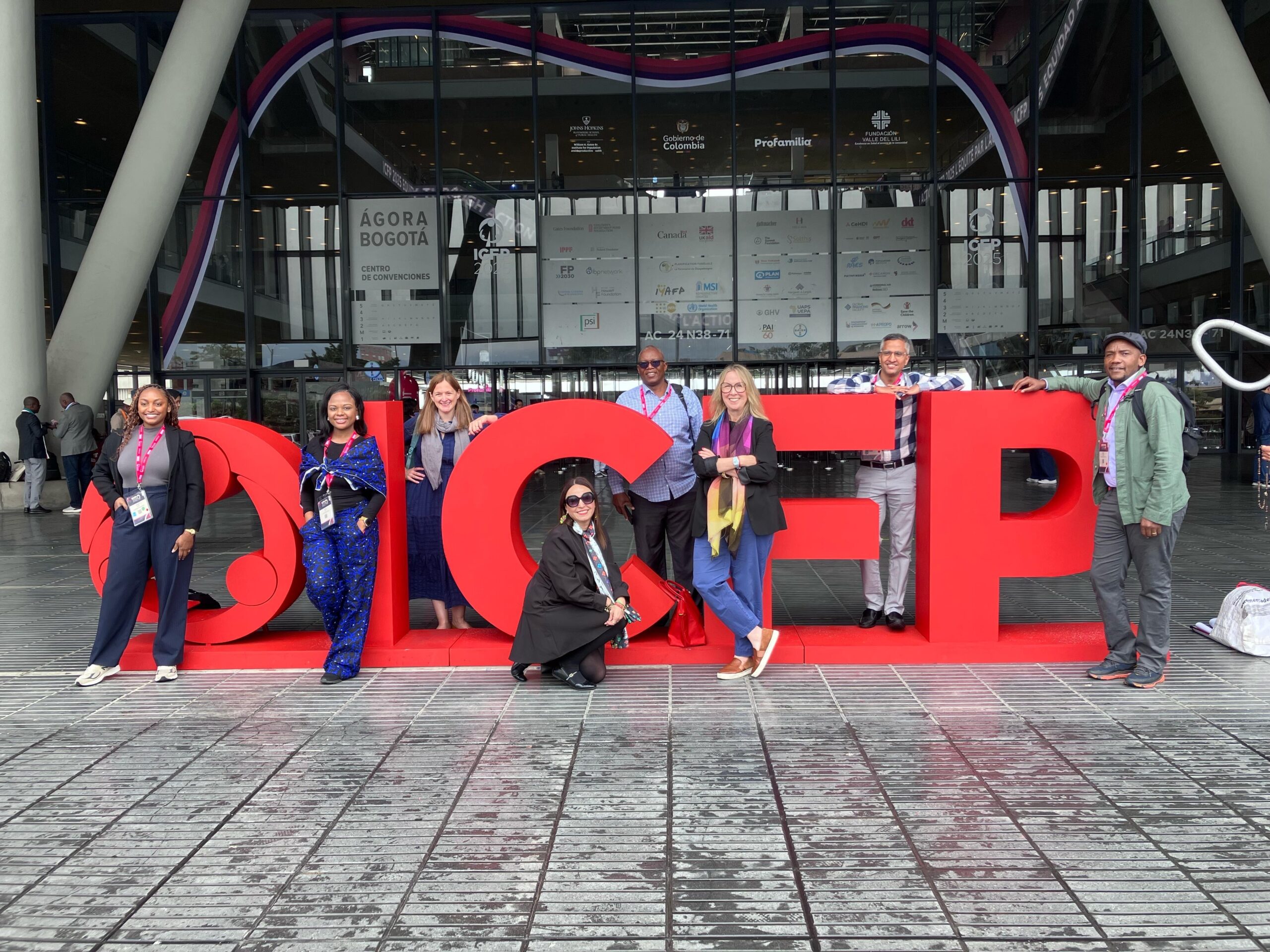
This November, PMC presented at the International Conference on Family Planning (ICFP2025), one of the largest global gatherings dedicated to sexual and reproductive health and rights (SRHR). ICFP brings together thousands of researchers, youth advocates, NGOs, country leaders, and funders to advance the field — and this year’s theme, ‘Equity Through Action,’ reflected the urgency of addressing systemic inequities through innovative solutions. For PMC, the conference was an opportunity to share research findings, present endline results, and connect with partners across the SRHR field.
PMC’s presence included booth activities, breakout conversations, and two sessions led by Country Directors who presented recent program results.
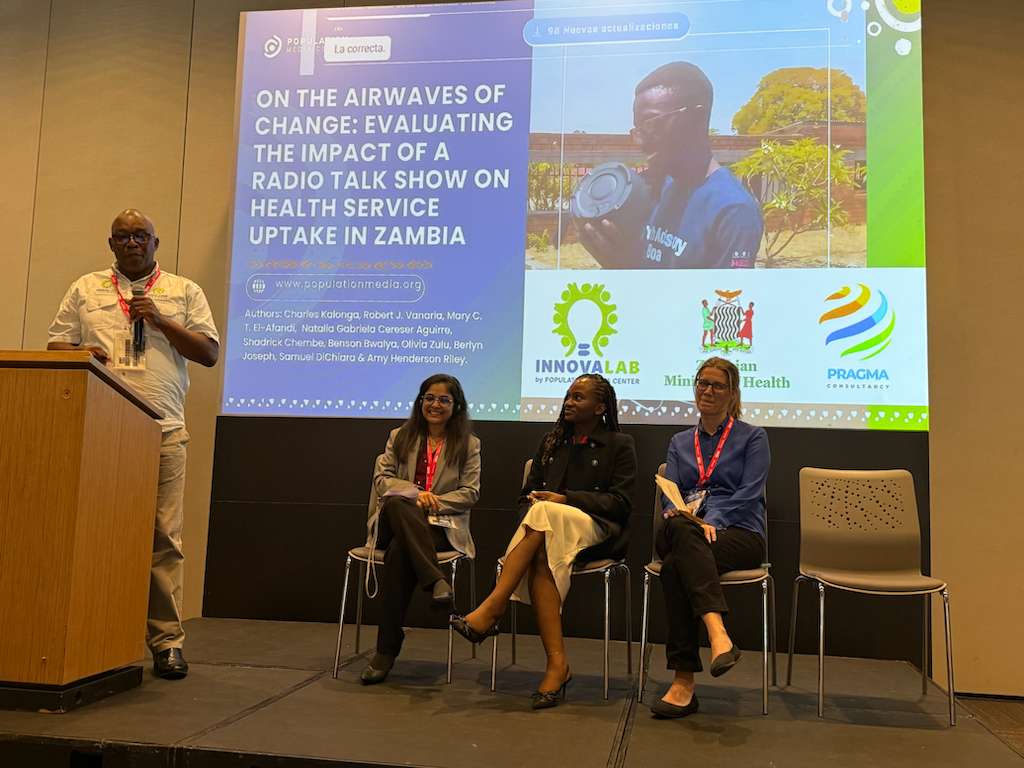
Zambia: Charles Kalonga on InnovaLab Pilots
Charles Kalonga, Country Director for PMC-Zambia, presented findings from PMC’s recent InnovaLab pilots across the Copperbelt region. He shared how community-rooted formats — including a live call-in radio show that opened space for honest dialogue about HIV and family planning — are moving audiences from awareness to behavior change. Kalonga highlighted measurable gains: increased PrEP knowledge, higher awareness of One-Stop Centers for gender-based violence services, and cultural shifts emerging in classrooms, markets, and homes.
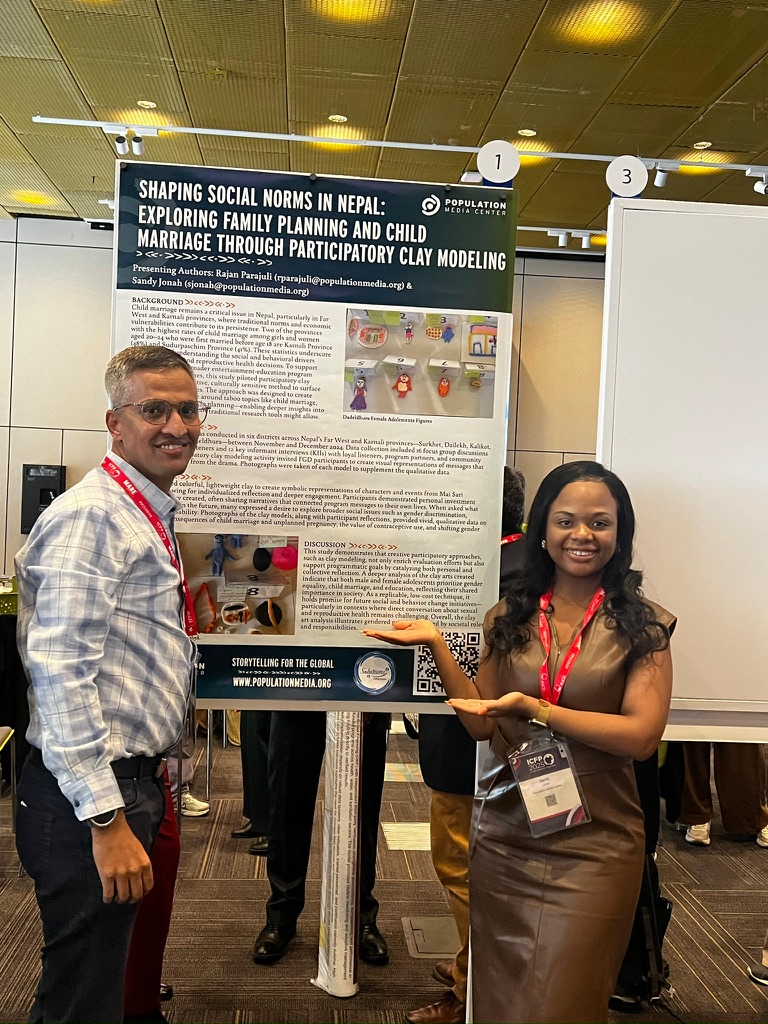
Nepal: Rajan Parajuli on Participatory Storytelling
Rajan Parajuli, Country Director for PMC-Nepal, presented on the rebroadcast of Mai Sari Sunakhari (“Orchid Like Me”) and the innovative engagement methods that accompanied it — shadow plays, short-form spin-off episodes, listening clubs, and digital storytelling. The centerpiece of his presentation was PMC-Nepal’s clay art evaluation, in which listeners translated their responses to the drama into sculpted forms representing loss, resilience, independence, and community protection. The results showed reduced acceptance of child marriage, greater support for girls’ education, and stronger engagement from men in challenging harmful traditions.
Key Takeaways
Two themes dominated the conference. First, youth are claiming their place as co-creators, leaders, and storytellers — not waiting to be included. Across panels and workshops, attendees highlighted the urgency of engaging young people throughout the full lifecycle of programs, from design to evaluation. Second, storytelling was recognized as a core technical tool for SRHR and social norms change — not an add-on. Creative media, youth-led content, and culturally grounded narratives were embraced as essential strategies, with particular emphasis on digital platforms and hybrid analogue-digital approaches.


As Amy Henderson Riley, PMC’s Director of Research, Evaluation, and Impact, reflected: “ICFP reminded me that our work moves at the speed of relationships. When we stay visible, flexible, and grounded in partnership, even the toughest challenges become opportunities for impact.”
Donors and implementers alike urged the field to move beyond short-term projects toward long-term, scalable programs rooted in lived experiences and community insights. As Natalia Cereser, PMC’s Vice President of International Programs, put it: “We need collective acceleration — every person brings power. Girls already hold the solutions, and when we truly listen to their voices and their demands, we can build the shared vision and new narrative our world needs.

