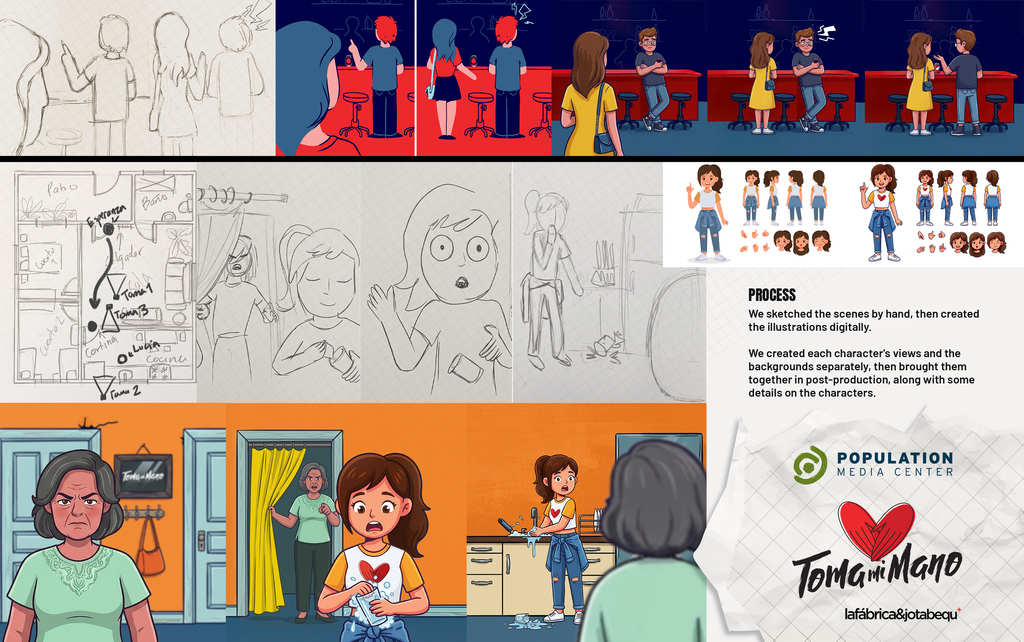
Toma Mi Mano (“Take My Hand”) began in 2018 as a 156-episode radio drama in Guatemala. When young people moved to TikTok, the story went with them: in 2026, PMC reimagined its teen pregnancy storyline as a 12-part animated series that reached 3.65 million young Guatemalans, passed 60 million views, and turned silence at home into conversation.
A story that works from the radio dial to the “For You” page
For years, Toma Mi Mano opened conversations through the radio in Guatemala, Mexico, and the United States. But young people were no longer listening to radio. They had moved to TikTok, so Toma Mi Mano went with them. In Guatemala in 2026, the same characters and the same Guatemalan voices became a 12-episode animated series that reached nearly 9 in 10 of the country’s 18- to 24-year-olds on the platform, and young people used it to start conversations that weren’t happening before.
In 2025, 56,889 babies were born to mothers ages 10 to 19 in Guatemala, about 156 every day (OSAR Guatemala). Conversations about sexuality rarely happen at home, and when young people can’t get answers from people they trust, misinformation on social media fills the silence.
Young people ages 18 to 24, the generation closest to many of the decisions Toma Mi Mano explores, weren’t tuning in to radio dramas. They were on TikTok, scrolling short vertical videos, often with the sound off. A 156-episode series, nearly 39 hours of audio, didn’t fit how they watch stories. So Toma Mi Mano set out to meet them there, with a clear goal: replace judgment with empathy, and turn silence into conversation.
3.65M
TikTok accounts of Guatemalans ages 18–24 reached between January and April 2026
60M+
TikTok views by the end of May 2026
9 in 10
of TikTok’s estimated 18–24 audience in Guatemala reached
The Approach
Working again with Guatemalan agency lafábrica&jotabequ, PMC chose one storyline to adapt: teen pregnancy. The team tested the concept with young people at Universidad Rafael Landívar, then went back to the original recordings and shaped the most powerful moments into 12 micro-episodes of under a minute each, using the original radio audio without re-recording a single scene. Every episode was hand-illustrated and animated in a vertical format, with bold subtitles for viewers watching without sound and a dramatic hook in the first few seconds.
A new episode premiered every Monday, turning the series into a weekly appointment that viewers could follow week by week or catch up on in one sitting. Targeted promotion helped each episode reach Guatemalans ages 18 to 24, and the PMC team stayed active in the comments, where viewers debated what they had just watched.
Microdramas, serialized stories told in one- to two-minute vertical episodes, are one of the fastest-growing formats in entertainment, and Latin America is one of their biggest markets. Toma Mi Mano showed that PMC’s methodology carries over: the bite-sized cliffhangers young people already binge can also carry stories that help them make informed decisions about their health and futures.
The Impact
Young people made the series their own. In focus groups, they remembered it as something that showed up on their For You page, not as an ad. And it didn’t stop when the ads did. Nearly 7 million of its views came after paid promotion ended, and more than 9 in 10 organic views came through TikTok’s For You feed: the algorithm and the audience both treated Toma Mi Mano as something worth watching. Viewers saved episodes to watch again, followed the account, and clicked through to trusted information on reproductive health and teen pregnancy.
7M
views after paid promotion ended
600K
click-throughs to trusted health information
27,288
saves to watch again
In focus groups held in Guatemala in April 2026, young people described binge-watching on their commutes, reading the comments as part of the experience, and waiting impatiently for Monday’s new episode. Above all, they described sharing it. An older sister used an episode to talk with her 15-year-old sibling. A father sent one to his partner to start a conversation about how to talk with their children about their bodies. In some homes, children shared the videos with their parents. A teacher used the episodes to open sexual education lessons, and her class went on to write a microdrama of their own.
Toma Mi Mano showed that TikTok microdramas can reach young audiences with reproductive health stories they find credible and worth talking about. It opens a path for PMC to bring more of its stories to the places young people already are. The methodology stays constant; the formats evolve with the audience.
Toma Mi Mano originally launched in 2018 as a 156-episode radio drama airing on 51 stations across all 22 departments of Guatemala, produced with lafábrica&jotabequ. Its storylines took on teen pregnancy, family planning, gender-based violence, and gang violence. PMC partnered with Plan International, Planned Parenthood Global, UNICEF, and others to bring the issues and characters alive. From its first broadcast, the show proved that entertainment grounded in credible research and lived experience doesn’t just inform — it moves people.
Where It Grew
The program’s impact demanded expansion. In 2021, Toma Mi Mano aired in Mexico on Radio Huayacocotla: La Voz de los Campesinos, an Indigenous community radio station reaching over 600,000 listeners across seven states. Epilogues were tailored for Mexican audiences, including promotion of OrientaSex’s sexual health hotline from MEXFAM, Mexico’s Planned Parenthood affiliate. Spanish Public Radio simulcast the daily stream, extending reach further.
In 2024 and 2025, the series returned to Guatemala with a digital rebroadcast and expanded to the United States as an audionovela available on YouTube, Spotify, and podcast platforms — reaching Spanish-speaking audiences from Los Angeles to Guatemala City. Those same recordings became the soundtrack of the 2026 TikTok series.
The Impact of Toma Mi Mano on the Radio
Partners & Funders
Erik E. and Edith H. Bergstrom Foundation
Private Funder
Weeden Foundation
See our work in action
Explore other projects where PMC’s methodology met massive audiences — and changed the conversation.