A 12-part animated TikTok series from Population Media Center (PMC) reached 3.65 million TikTok accounts of Guatemalans ages 18 to 24 between January and April 2026. By the end of May, the series had passed 60 million views.
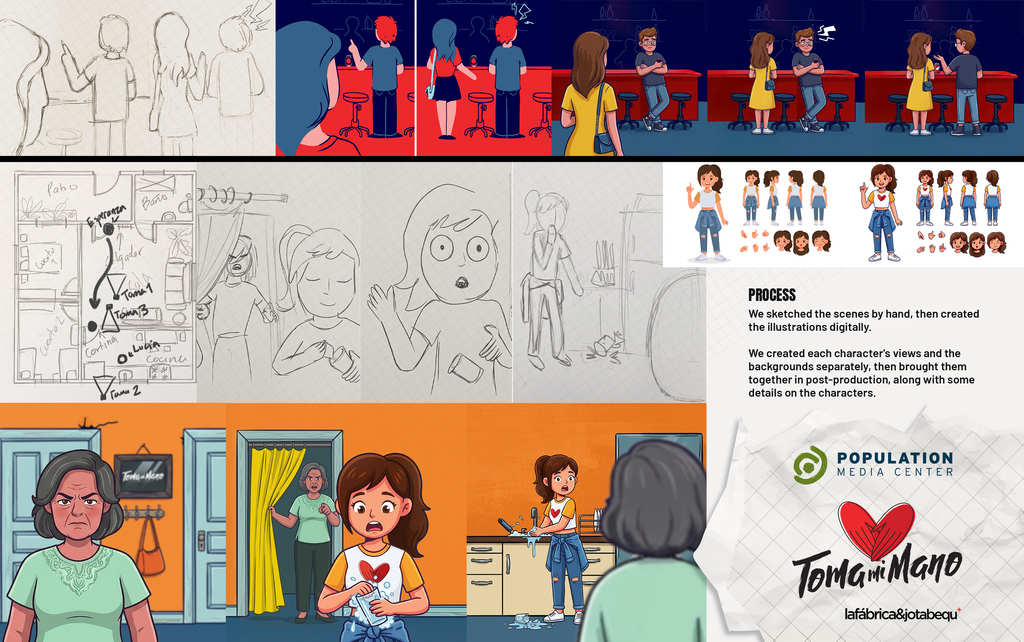
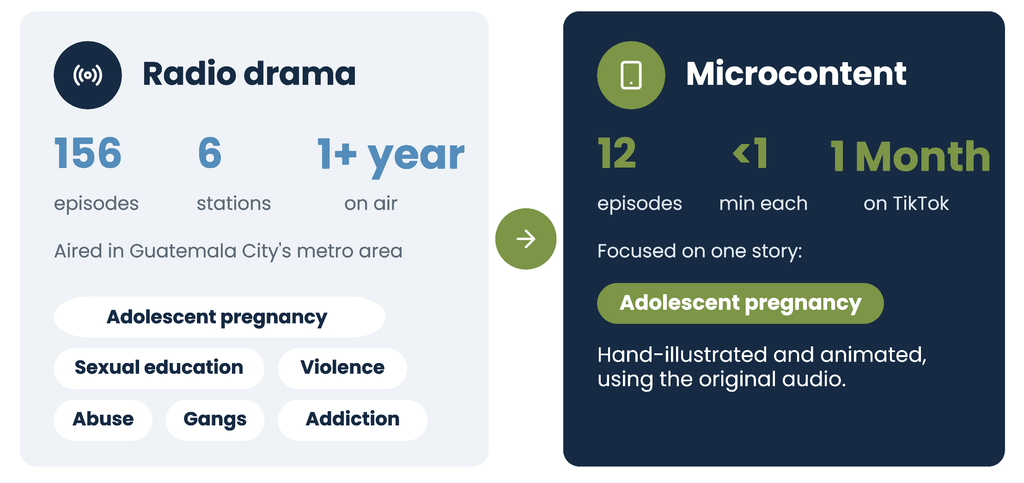
The series, Toma Mi Mano (“Take My Hand”), is adapted from PMC’s 156-episode radio drama of the same name, which has reached audiences in Guatemala, Mexico, and the United States since 2018. Using the original radio audio and new hand-drawn animation, PMC brought the story to the platform where young Guatemalans already spend their time.
Toma Mi Mano tells a story about teen pregnancy. Young people didn’t just watch it. They saved it, shared it with siblings and parents, and used it to start conversations that weren’t previously happening.
3.65M
TikTok accounts of Guatemalans ages 18–24 reached
60M+
TikTok views by the end of May 2026
9 in 10
of TikTok’s estimated 18–24 audience in Guatemala reached
Same story, new stage
PMC launched Toma Mi Mano in Guatemala in 2018 as a 156-episode radio drama, produced with Guatemalan agency lafábrica&jotabequ using PMC’s methodology for long-running entertainment that changes lives. It aired on 51 stations across all 22 departments, then kept traveling: in 2021, Indigenous community station Radio Huayacocotla brought it to 600,000 listeners across seven Mexican states, and in 2024 and 2025 it returned to the greater Guatemala City area and reached Spanish-speaking audiences in the United States.
Young people ages 18 to 24 in Guatemala City, the generation closest to some of the decisions the story explores, were spending their time on TikTok, scrolling short vertical videos, often with the sound off. A 156-episode series, nearly 39 hours of audio, didn’t fit how they consume stories.
Working again with lafábrica&jotabequ, PMC chose one storyline to adapt: teen pregnancy. We tested the concept with young people at Universidad Rafael Landívar, then returned to the original recordings. The team selected the most powerful moments and shaped them into 12 micro-episodes of under one minute each, using the original radio audio without re-recording a single scene. Every episode was hand-illustrated and animated in a vertical format, with bold on-screen subtitles for viewers watching without sound and a dramatic hook in the first few seconds.
A new episode premiered every Monday, numbered 1/12 through 12/12, so viewers could follow along week by week or catch up in one sitting. Targeted promotion on TikTok helped each episode reach Guatemalans ages 18 to 24, and our team stayed active in the comments, where viewers debated and worked through what they had just watched.
The story itself didn’t change. Verónica’s pregnancy, a mother’s fear, a grandmother’s choice to respond with support: these are the same characters and voices radio listeners met in 2018. What changed was the stage.
A proven methodology, built for the scroll
Microdramas, serialized stories told in vertical episodes of one or two minutes and watched on mobile devices, are one of the fastest-growing formats in entertainment. People downloaded microdrama apps more than 850 million times in the first quarter of 2026 alone, up 140% from a year earlier, and Latin America accounted for nearly a quarter of those downloads, according to app-analytics firm Sensor Tower.
With Toma Mi Mano, PMC brought its proven methodology to this new format, and the results that follow show it translates: the bite-sized cliffhangers young people already binge can also carry stories that help them navigate real decisions about their health and futures.
Young people are looking for information about their bodies, relationships, and futures. A key source is online, and when they don’t find it from sources they know or trust, someone else fills that gap, often with misinformation or with messages that reinforce harmful norms. PMC’s shows provide accurate information inside stories audiences care about, helping them make informed choices of their own. As young people’s habits change, the way we reach them has to change too.
On the feeds of nearly every young Guatemalan
The series reached nearly 9 in 10 of TikTok’s estimated audience of 18- to 24-year-olds in Guatemala. Of its more than 60 million views, nearly 7 million came after paid promotion ended, as young people kept finding and sharing the episodes on their own.
Viewers saved episodes 27,288 times to watch again, demonstrating the relevance of the content to their real lives. Viewers also clicked through nearly 600,000 times to learn more, accessing information about reproductive health and teen pregnancy from trusted, curated sources, and 16,600 new followers joined the account.
27,288
saves to watch again
600K
click-throughs to trusted health information
7M
views after paid promotion ended
More than 9 in 10 of the organic views came through TikTok’s For You feed. In other words, both the algorithm and the audience treated Toma Mi Mano as something worth watching.
Starting conversations that weren’t happening at home
Numbers show reach. Young people’s own words show impact. In focus groups held in Guatemala in April 2026, participants described binge-watching the series on their commutes, reading the comments as part of the experience, and growing impatient when they had to wait for Monday’s new episode. Above all, they described sharing it.
“I shared it with my little sister and tried to talk about it, because our parents don’t,” one participant said. An older sister used an episode to talk with her 15-year-old sibling. A father sent an episode to his partner to start a conversation about naming parts of the body to their children without euphemisms. In some homes, it was the children who shared the videos with their parents.
A teacher used the episodes to open sexual education lessons, and found her students asking what happens next at the end of each cliffhanger episode. That class even decided to write their own microdrama.
“I shared it with my little sister and tried to talk about it, because our parents don’t.”
That is exactly what Toma Mi Mano was designed to do: use story to open conversations.
Toma Mi Mano began as a radio drama in 2018. Today, it is also a TikTok series young Guatemalans have binged, saved for themselves, and sent to their sisters. Our methodology stays constant, and our formats evolve with our audiences.