The Value of Women and Girls: Always Center Stage at PMC
Thought Leadership


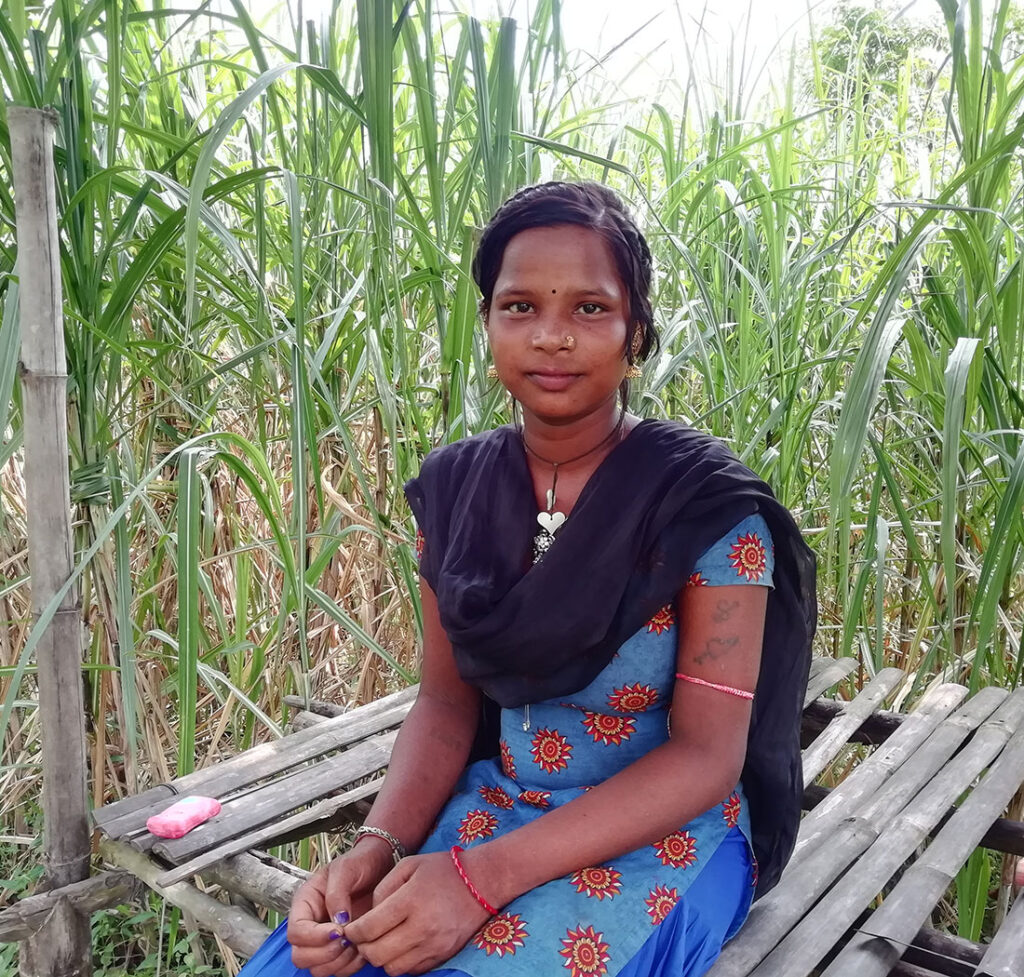
“The children of other castes call us untouchable. They don’t eat with us, play with us and don’t even drink water from the same tap,” says Sangita reflecting on her experience in school.
Sangita’s family is from the marginalized Naraha Barchhawa community in Siraha, in Nepal’s eastern Terai region. Because of caste-based discrimination, she was forced to leave school at the age of ten. A handful of years later, Sangita would find herself fighting to avoid becoming a child bride.
Sangita’s story is not unique. Girls Not Brides reports that one in five girls globally are married before they turn 18. According to World Health Organization estimates, almost one in three girls globally will experience physical or sexual abuse in her lifetime.
Within the world’s girls lives an unimaginable strength, passion, and potential. They are the keepers of miraculous gardens—gardens that grow ideas and ways of being. As a parent and as a member of the global community, I want girls to know that every girl deserves to be given the tools, time, and experiences to understand herself. Her mind. Her body. Her feelings. Her dreams. Her vision.
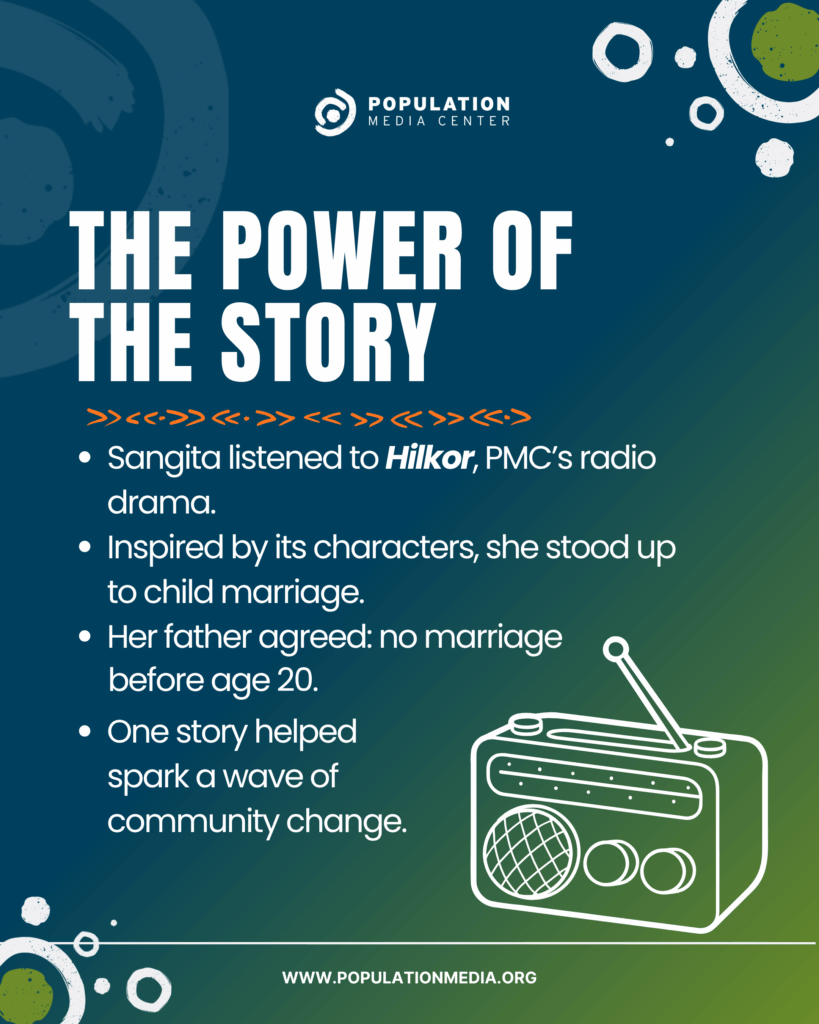
Sangita was able to join the Janaki Women Awareness Society (JWAS), a local non-profit dedicated to empowering girls with life skills. At JWAS, Sangita and other girls listened to Population Media Center’s 104-episode drama Hilkor (“Ripples in the Water”).
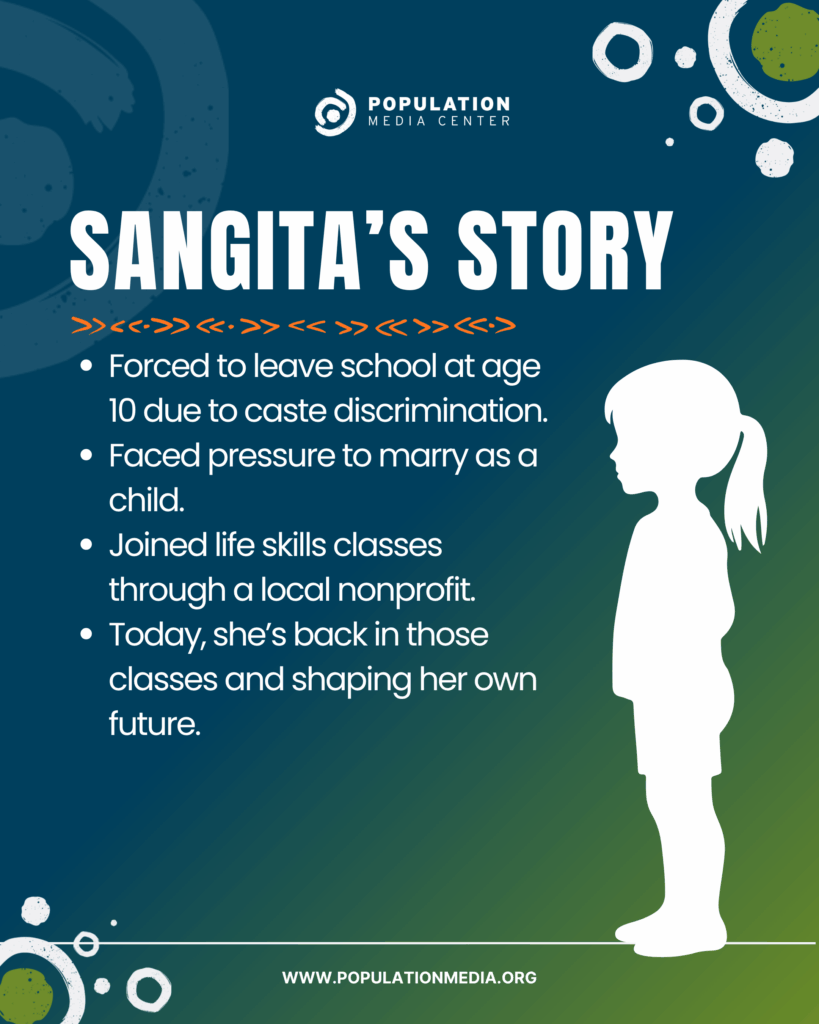
Listening to Hilkor, Sangita followed female characters for whom education was improving their lives. Even still, the lack of equal rights for women and continued gender-based violence and forced marriage – were apparent to Sangita.
“By adding Hilkor into the curriculum at JWAS, we were able to get in front of those most affected by child marriage,” said PMC-Nepal Country Director Rajan Parajuli. “The girls were not only at the highest risk for child marriage, but they were also the most likely to create a wave of community inspiring change.”
Sangita tried to communicate lessons she learned from Hilkor’s characters to her family, but her parents still approached her with a prospective husband. Sangita refused to see the man they selected. She was determined to delay her marriage in order to stay in the life skills classes offered by JWAS. She was scolded and then beaten by her father in an attempt to convince her to marry, but Sangita did not waver.
Sangita’s courage and strength was reinforced by other brave members of her community, who were moved by Sangita and the messages in Hilkor and helped Sangita persuade her father. Eventually, Sangita’s father promised that he would not marry her to anyone until she was 20 years old.
It’s still not enough. But it has given Sangita and her community of changemakers something precious—time. Time to prove that girls deserve their own childhoods, not marriages arranged for them. Time to reshape the norms so that others will not have to fight simply to learn and get an education.
Today, on International Day of the Girl, we refuse to allow our girls to be denied access to education and the chance to have a full childhood.
Today, we celebrate girls around the world. We wish for every girl to learn who she is and what she is capable of. Food, water, and air nourish the body. Today, we look to the things that nourish the spirit: joy, laughter, agency, education, hope, and love. We celebrate the women that well-nourished girls become. Because on this day, as we dream of the future we are creating, we know that the world has never harbored such potential.

