International Day of Zero Tolerance for Female Genital Mutilation
On the International Day of Zero Tolerance for Female Genital Mutilation in 2026, we stand in support of the global community fighting to end female genital mutilation (FGM) by 2030. At Population Media Center (PMC), we recognize that ending FGM requires more than just investments in policy and advocacy. We must address deep-seated social norms, requiring urgent investments in changing the hearts and minds of communities across the world. We are proud to have co-created over 20 transformative entertainment-education projects specifically designed to end FGM. With entertainment-education projects in Burkina Faso, Ethiopia, Kenya, Mali, Senegal, Sierra Leone, and more, we have written stories to rewrite the ways women and girls are treated.
The Fight to End FGM: Changing Norms to Save Lives
Today, over 12,000 girls are at risk of undergoing FGM. That is just today. That is 4.4 million girls this year who face a violation of their basic human rights. 4.4 million children who deserve better and deserve a future free from physical harm and violence. These girls will experience violence and harm that will stay with them for the rest of their lives, unless we work together to finally end FGM.

Population Media Center’s Approach
We know that laws alone cannot stop FGM. To end FGM, we must change hearts and minds – through storytelling. With entertainment-education, relatable role models, formative research, and proven impact, we challenge the gender norms that allow this practice to persist. Instead of telling people they must stop, we show them there is a different path forward that is better for the people in their own lives, the people who make up their community, the people whom they love the most. Their children. Their daughters. Their future. Our collective future.
By creating entertaining stories that engage whole communities, entire countries – including men and boys – we can create a world in which girls are valued. A world in which girls are inherently worthy and have a future worth living for. To stop FGM, we must ensure every girl has the right to health, education, bodily autonomy, and most importantly – that every girl and woman feels safe in their own bodies.
Barnusietehdeh : “let’s do the right thing” – liberia

A radio drama, call in show and participatory theater program in Liberia
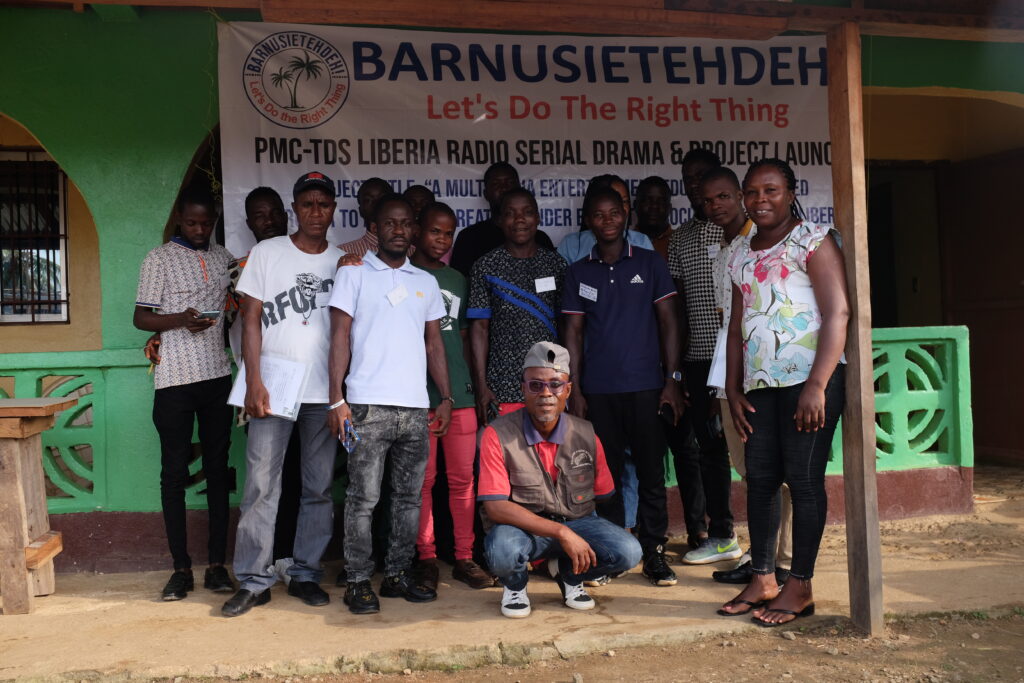
Partnering with a local organization in Liberia, Talking Drums Studio (TDS), and with funding from the Swedish International Development Agency (SIDA), PMC launched a nationwide multimedia campaign in 2023-2024 called Barnusietehdeh! (“Let’s Do The Right Thing”). Through a compelling radio drama, talk shows, and participatory theater across all 15 counties, PMC aimed to raise awareness and ignite meaningful conversations around sexual and reproductive health and rights (SRHR), gender equality, and social cohesion, including FGM.
The project played a vital role in advancing conversations and driving progress on important societal issues such as gender-based violence, FGM, and gender inequality. Liberia has taken significant steps forward with legislative efforts like the Domestic Violence Act and the FGM ban, reflecting the nation’s commitment to protecting and empowering its people. However, lasting change goes beyond laws—it requires community-driven efforts to reshape social norms and foster greater equity. Social behavior change initiatives, like PMC’s, support this progress by encouraging open dialogue and opening minds, inspiring positive shifts in attitudes, and empowering individuals to build a more just and inclusive future. A future where girls are free from violence, including harmful practices like FGM.


The impact was undeniable:
- Reduced Support for Harmful Practices: Support for FGM among listeners decreased substantially, with those opposing it rising from 17% at baseline to 64% at endline.
This project’s endline evaluation revealed a shift within the landscape of Liberia. This dramatic reversal in public sentiment among listeners highlights radio as an indispensable tool in the global movement to end FGM. By navigating the delicate intersection of culture and human rights, the program catalyzed a genuine evolution through storytelling and through relatable, well-researched characters and storylines. These results prove that when communities are engaged through narratives that respect their heritage while challenging its harmful elements, even the most deeply entrenched practices can be questioned, recast in a different light, and ultimately ended.
Radio Show to End FGM In Liberia
In this powerful radio program, special guest Marian Deah shed light on the profound significance of the International Day of Zero Tolerance for Female Genital Mutilation. She shared deep insights into the collective action required to eradicate this harmful practice and explored the pathways toward a safer future for women and girls. This was an insightful and urgent conversation that brought together voices from across the community. We invited our audience to join the movement by sharing their thoughts and reflections—because every voice matters in this crucial dialogue.
Ethiopia: Over 2 decades of impact addressing fgm

Breaking the Silence with Nekakat
In Ethiopia, a transformative message was amplified, shattering the cultural silence that shields FGM. The Nekakat (“Cracked”) radio drama offered popular entertainment transmitted across Amhara, Oromia, Tigray, SNNP, and Addis Ababa. Running from late 2020 to mid-2022, this 156-episode series took a bold stand against FGM, weaving compelling narratives about safety and bodily autonomy into the daily lives of listeners. By tackling deep-rooted stigmas head-on, Nekakat transformed the airwaves into a safe space for dialogue, challenging the status quo and advocating for the protection of women and girls across the nation.
The results speak to the power of storytelling to drive social change. Reaching over 820,000 individuals and engaging diverse communities through listener groups and digital platforms, Nekakat sparked a tangible shift in behavior and awareness.
Sibrat: Healing Trauma Through Storytelling
For two years, the Sibrat (“Trauma”) radio drama captivated the nation, using the airwaves of the National Services of Radio Ethiopia to confront the deep-seated scars of FGM. Spanning 226 episodes, this powerful series went beyond entertainment to tackle the harsh realities of harmful traditional practices. Through the eyes of resilient role models like Abeba, Sibrat provided a compelling counter-narrative to FGM, vividly illustrating the physical and emotional consequences of the practice. By humanizing the statistics and dramatizing the “trauma” implied by its title, the show created an urgent, emotional imperative for listeners to protect the next generation of girls.
The impact of Sibrat resonated beyond the radio dial, sparking a nationwide dialogue on gender equality and domestic violence. The drama’s widespread popularity turned passive listeners into active agents of change, prompting deep reflection and community discussions that challenged the validity of FGM. Personal testimonials from the audience revealed that the show’s emotional storytelling was a catalyst for behavioral shifts, empowering families to reject harmful norms. Sibrat stands as a testament to the fact that when we change the narrative, we have the power to change the future for Ethiopian women.
Life in the Balance: Rewriting Kenya’s Cultural Script
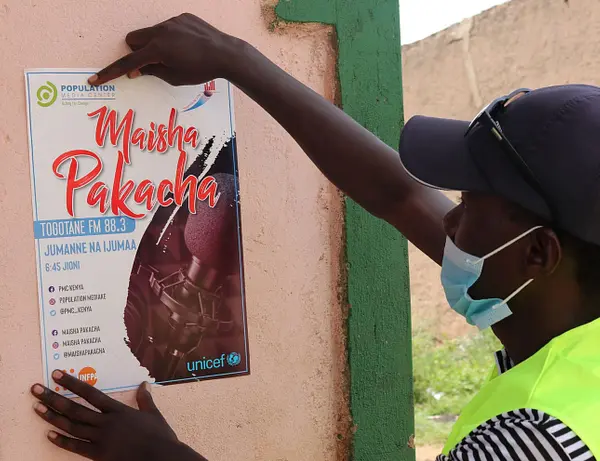
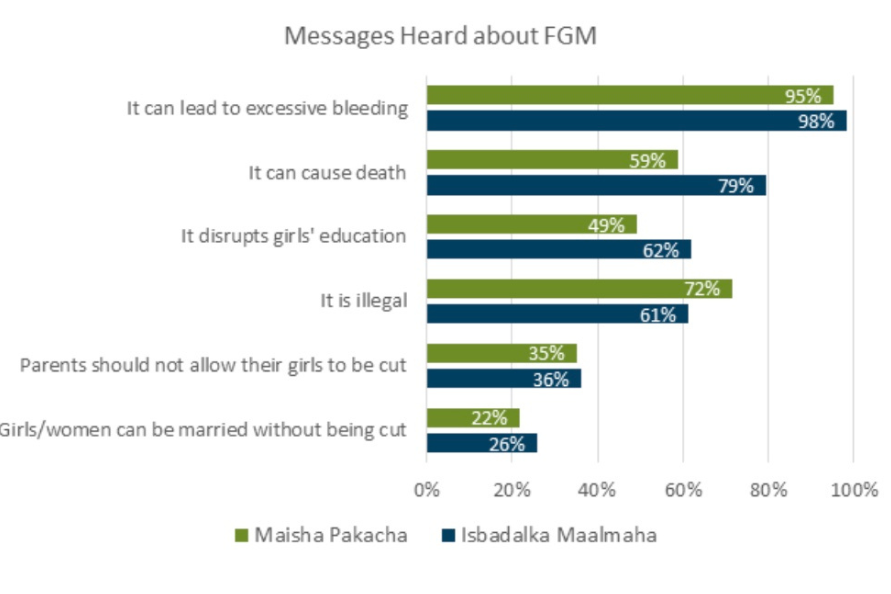
Building on its global legacy of social transformation, PMC expanded to Kenya in 2020 to support the United Nations’ efforts to end FGM. In partnership with the UNFPA-UNICEF Joint Programme on the Elimination of FGM, PMC-Kenya launched two radio dramas—Maisha Pakacha (“Life is a Carrier Bag”) in Swahili and Isbadalka Maalmaha (“Changing Days”) in Somali—bridging high-level policy goals with grassroots behavioral change.
Working to end fgm in kenya through Maisha Pakacha
Between January 2021 and January 2022, these dramas targeted critical hotspots including the Somali Region and Nyanza Province, addressing FGM, reproductive health, and gender-based violence. Funded by the UNFPA-UNICEF Joint Programme with evaluation support from the Bergstrom Foundation, the initiative achieved unprecedented reach, capturing an average of 97.2% of the available audience and engaging over 1.7 million Kenyans weekly.
Airing twice weekly, Maisha Pakacha systematically deconstructed harmful justifications for FGM, child marriage, and gender-based violence through relatable, high-stakes drama. The impact extended beyond the broadcast through interactive engagement on WhatsApp, Facebook, Instagram, and Twitter, empowering listeners to move from passive consumption to active advocacy. By centering the narrative on lived experiences of those affected by FGM, the program equipped families with knowledge to reject harmful practices and choose a future defined by empowerment, rewriting Kenya’s cultural script one episode at a time.

The Redemption of Mang’iti: Breaking with harmful traditions
In the village of Girirriani, the “circumcision season” brings a devastating rift to Mang’iti’s family. Swayed by the rigid traditionalism of the family matriarch, Mama Wembe, Mang’iti ignores the pleas of his brother and forces his 13-year-old daughter, Robi, to undergo FGM. The consequences are immediate and harrowing: Robi suffers severe physical complications, eventually developing an obstetric fistula during a traumatic childbirth. Broken by the practice, Robi flees her home and her father’s shadow to seek a life of autonomy and education.
Witnessing his daughter’s immense suffering and her total estrangement from him, Mang’iti undergoes a profound transformation from a perpetrator to a protector. When Mama Wembe demands that his younger daughter be next, Mang’iti stands firm against the weight of tradition. He successfully shields his youngest child by enrolling her in a secure boarding school—the same institution where Robi is reclaiming her future. No longer a silent witness, Mang’iti joins the council of elders, using his story to champion the end of FGM and ensuring that for his family, the “cutting season” is over forever.
Girirriani may be a fictional town, and Robi may be a fictional girl, but their stories mirror truth – their pain reflects the real-life tragedy of FGM. Men like Mang’iti can and do change their behavior. The loud voices echoed in radios across the country can be the turning point to ending harmful practices when people tune into these shows. Are the characters real? No, but the change is undoubtedly real as a result of their stories.
When Health Heroes Become Storytellers
A key lesson learned in Ethiopia from the success of Isbadalka Maalmaha and Maisha Pakacha was the immense power of Community Health Volunteers (CHVs) and healthcare workers as natural catalysts for social change. While the project recognized CHVs as the community’s most trusted sources of health information, their role evolved from medical experts to passionate advocates for the dramas themselves. Remarkably, without formal instruction from PMC, healthcare workers across the intervention counties became “organic promoters” simply because they listened to and personally enjoyed the programs. By connecting with the characters and the narratives on an emotional level, these frontline workers began championing the shows’ messages on FGM, family planning, and gender-based violence during their daily rounds. This synergy demonstrates that when educational content is genuinely engaging, health advocates will transition from passive listeners to active community messengers, bridging the gap between clinical knowledge and cultural transformation.
The Final Act: Rewriting the Future for Girls Everywhere
PMC’s approach involves deep collaboration with local creators and international partners to ensure our narratives are not only entertaining but also rooted in the specific social realities of each region. Through this model, we move beyond simply “telling” people to stop harmful practices; instead, we allow audiences to experience the emotional and physical journey of characters who choose a different path, making the abandonment of FGM a community-led aspiration rather than an outside mandate.
Ending FGM is a global imperative because it remains one of the most profound barriers to gender equality and human rights. It is not merely a traditional procedure but a practice that carries lifelong consequences ranging from chronic physical pain and birth complications to deep-seated psychological trauma. By eliminating FGM, we unlock the full potential of girls and women, allowing them to pursue education, lead healthy lives, and contribute fully to their economies. PMC’s mission is built on the belief that when we protect a girl’s bodily autonomy, we protect the future of her entire community. Together with our partners, we will continue to use the power of storytelling to ensure that every girl, regardless of where she is born, can live a life free from Female Genital Mutilation.