the latest
When Storytellers Gather: Reflections from the Impact + profit Conference
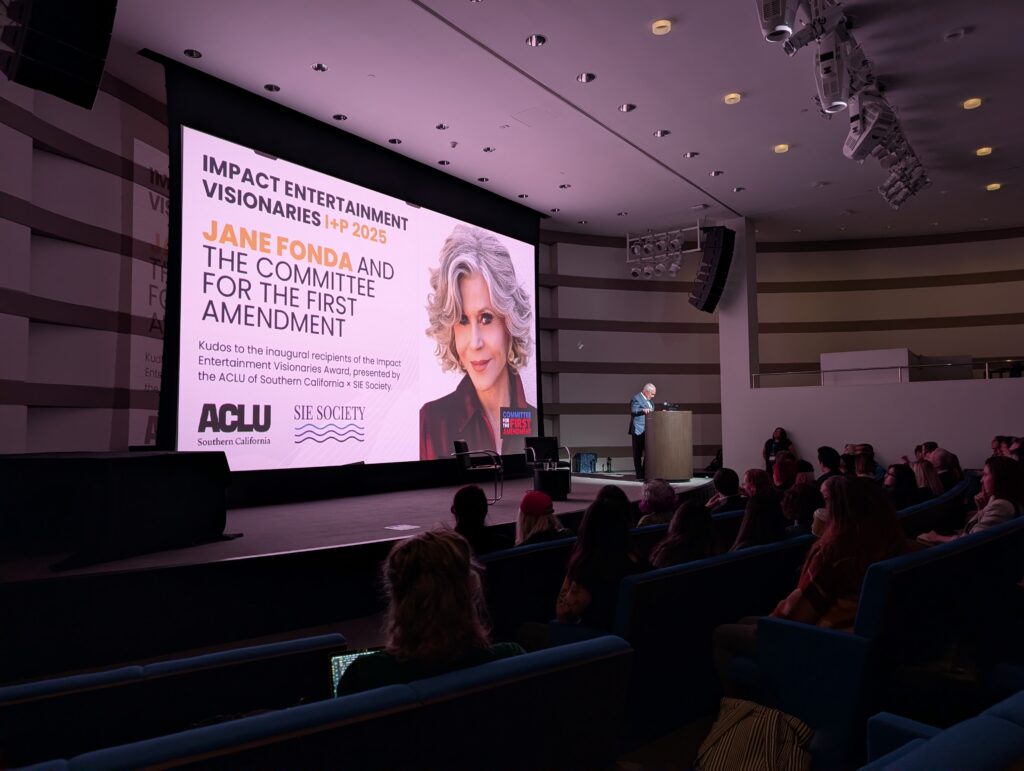
The lights were dimmed. Jane Fonda leaned into the microphone. And in that moment, a room full of storytellers, researchers, and changemakers remembered why we do what we do. Entertainment isn’t just an escape, it’s a form of resistance, a catalyst for change, a mirror we hold up to society asking, “What do we want to see reflected back?”
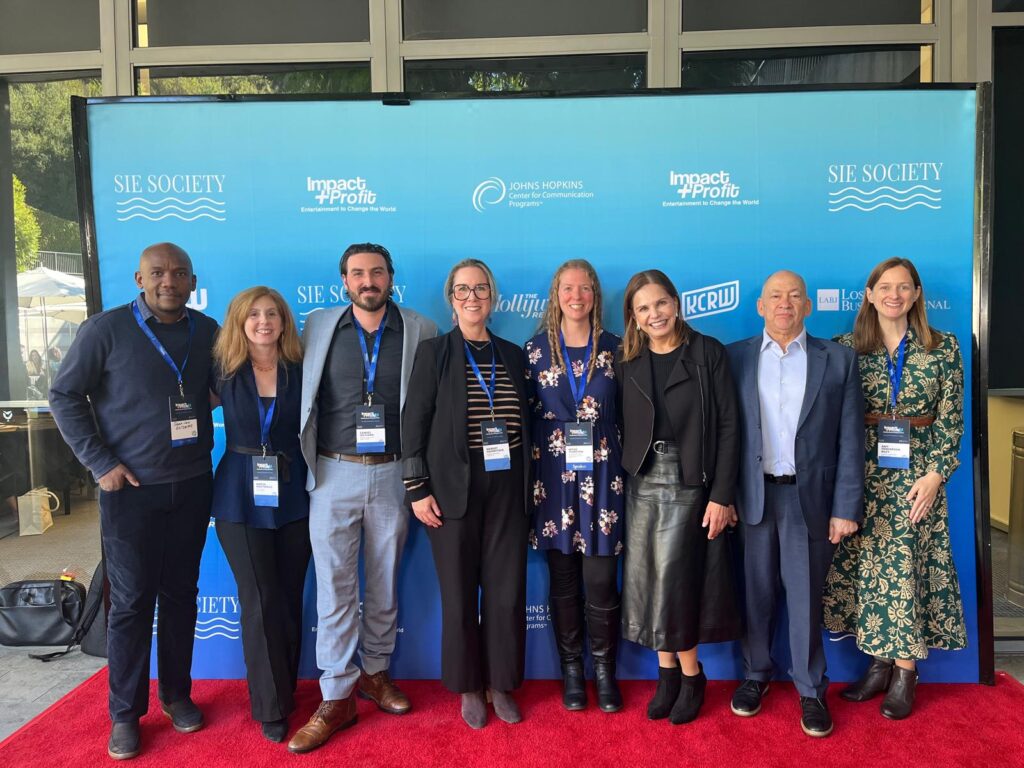
This was just one of many powerful moments at this year’s Impact + Profit Conference in December at the Skirball Center in Los Angeles, California, where the Population Media Center team was a proud sponsor. We joined fellow practitioners committed to using narrative and entertainment to shift culture, challenge norms, and spark meaningful action.
The State of the Story
Let’s be honest: these aren’t easy times for entertainment-driven impact work.
The conference made one thing crystal clear: Hollywood is hurting. Mergers are reshaping the landscape. Censorship concerns loom large. The number of studios is shrinking, and with it, the diversity of voices and perspectives that make it to our screens.
PMC’s Vice President of Global Marketing and U.S. Programs, Missie Thurston, observed, “Hollywood is hurting, and mass mergers and government censorship are having—and will have—a big impact in terms of that quantity and angle of content.”
Our Director of Research, Evaluation, and Impact, Amy Henderson Riley, DrPH, noted the shifting landscape too: “There are shifting plates in funding, in global development, and across Hollywood (e.g., the pending Netflix deal with Warner Bros.) that all impact our work.”
But here’s the plot twist: in every challenge, we find opportunity. Henderson Riley says: “Despite changes, there is room for innovation and risk taking.”
Where PMC Stands Out
As we hosted and participated in panels and networking sessions, we had this insight: PMC already knows how to tell stories that make a difference. We’re creating content that embeds research from day one, designing sophisticated evaluations, and publishing findings that push the field forward.
PMC’s Research Associate, Samuel DiChiara noted that we are at “the leading edge in social entertainment impact research. We embed research from the inception of any program. We can integrate research goals into program design from day one, creating alignment between strategy and measurement.”
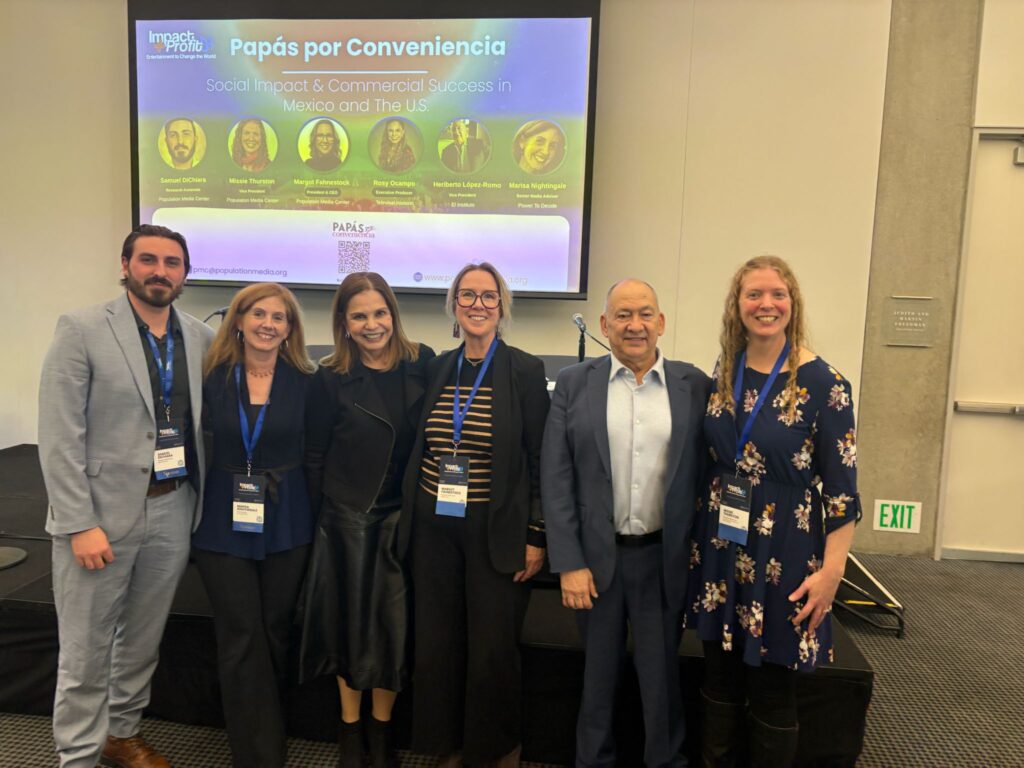
We featured this experience in a panel about Papás Por Conveniencia (“Family of Convenience”), a prime-time telenovela reaching more than 11.5 million people in Mexico and more than 9.5 million people in the United States. The percentage of adolescent viewers that intend to use a condom increased by 21.6%, from 57.9% at baseline to 79.5% after the show. The panel, moderated by Thurston, included PMC’s President and CEO Margot Fahnestock, DiChiara, TelevisaUnivision’s Showrunner and Executive Producer Rosy Ocampo, Heriberto López from our research partner El Instituto, and Marisa Nightingale from our advocacy partner Power To Decide.
Henderson Riley put it simply, “PMC has a niche in terms of research and how we measure ‘impact.’”
As media viewing habits change and with the growing gaps in service provision, understanding and measuring impact gets more complicated. The PMC team is always evolving our research approaches—and taking notes on where we can support colleagues in this work.
Fahnestock noted these as key opportunities for PMC, saying we need to bring “measurement, issue focus, and narrative change to the forefront, building on PMC’s past work and adapting to these future realities.”
The Humor Hypothesis
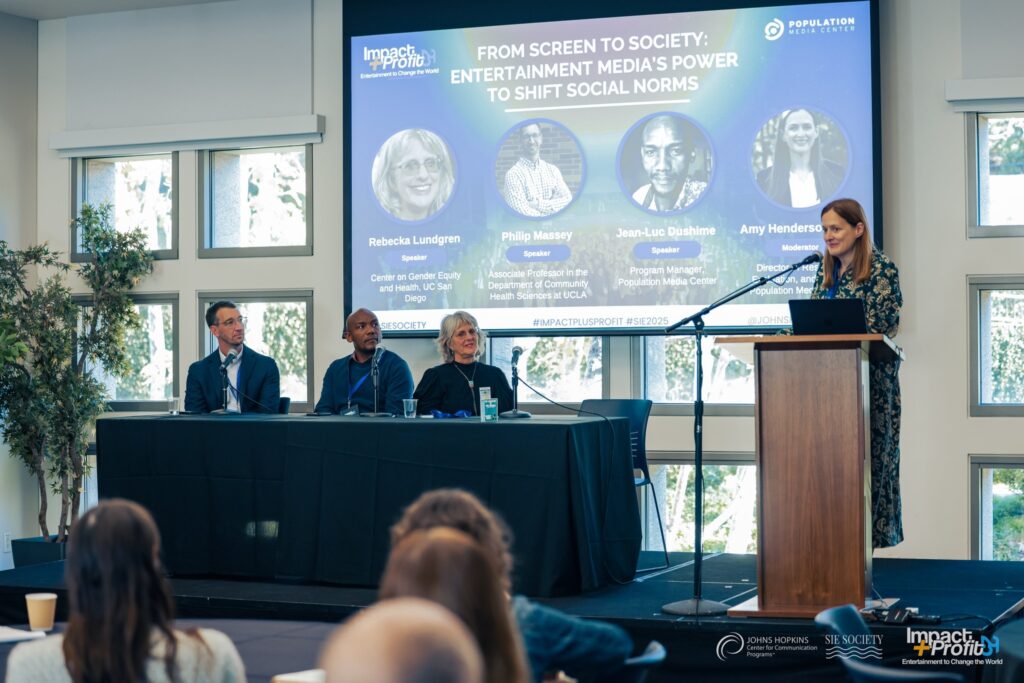
One insight kept bubbling up throughout the conference: could humor be the key to unlocking conversations about sensitive issues? Could reality TV, often dismissed as frivolous, be a vehicle for meaningful change? PMC Program Manager Jean Luc Dushime, who has worked across our Liberia, Niger and other country programs notes: “We can take each cause seriously, but we don’t have to take seriously the way we talk about that cause.” Comedy, he observed, could be “an effective translator” for social change.
These aren’t just theoretical questions. They’re invitations to experiment, to play, to remember that entertainment’s power lies partly in its ability to surprise us.
Following the Audience
Here’s what we heard loud and clear: the audience remains at the center. The kids want to be influencers. Short-form content dominates their attention, yet prime time still captivates millions.
Thurston captured a striking insight about the next generation: “The number one thing kids say they want to be when they grow up is influencers.” This isn’t just a fun fact, it’s a fundamental shift in how young people see media creation and influence.
The question isn’t whether this is good or bad. The question is: are we meeting people where they actually are? Audiences we’re trying to reach aren’t consuming media the way they used to or the way we might want them to.
She continued: “We need to explore short form content to align with content consumption patterns; how to influence culture.”
This means thinking differently about influencer partnerships, moving beyond promotional videos to sustained collaborations where values become woven into broader content. It means exploring formats that feel native to how audiences already consume stories. It means potentially uncomfortable questions about distribution in a rapidly consolidating media landscape.
The Power of Co-Design
Perhaps the most important wake-up call was about who’s in the room when decisions get made. Multiple sessions reinforced what we’ve long known but always need to improve in our practice: affected populations need to be at the table from the beginning—not only as informative interviewees and as consultants, but as co-designers shaping the work from inception.
The best outcomes happen when we expand beyond the aspects we’ve done well, like hiring local writers, creating listening groups, conducting design workshops, and setting up advisory panels. How do we do an even better job of getting inputs and feedback from the people we’re trying to serve? More touchpoints. More authentic voices. More trust built over time.
Where We Go From Here
Let’s not sugarcoat the challenges. An ever evolving media landscape, changing consumption habits, and narrowing opportunities for diverse storytelling, will shape the work PMC does over the next several years.
The Impact + Profit conference revealed both challenges and extraordinary opportunities. Fahnestock captured several key areas to explore including “bridging the divide between entertainment and global development, linking to broader movements, defining and measuring impact, and exploring new funding partners.”
Now it’s about evolution: staying nimble in a changing landscape, deepening our partnerships with creators and communities, exploring new formats and platforms, and never losing sight of the fundamental truth that brought everyone to the Impact + Profit conference: stories matter. How we tell them matters. How we measure them matters. Who gets to tell them matters most of all.